
Cheryl Reeve didn’t mince words after the Minnesota Lynx’s 84-76 Game 3 loss to the Phoenix Mercury.
“One of the best players in the league shot zero free throws,” she said. “(Napheesa Collier) got her shoulder pulled out, and finished the game with her leg being taken out, and probably has a fracture.
“So, if this is what the league wants, okay, but I want to call for a change in leadership at the league level when it comes to officiating,” he continued. “It’s bad for the game. The officiating crew that we had tonight, for the leadership to deem those three people semi-finals playoff worthy, is f—ing malpractice.”
Reeve echoed concerns expressed by many WNBA coaches over this year’s playoffs and what seems to be a recurring issue every season. The officiating allows for a game that is too physical, not consistent, and puts players’ safety in jeopardy.
First, let’s address the play that directly led to Reeve’s postgame statement, a play that even Bill Simmons had to weigh in on.
“That is unequivocally a foul,” he tweeted.
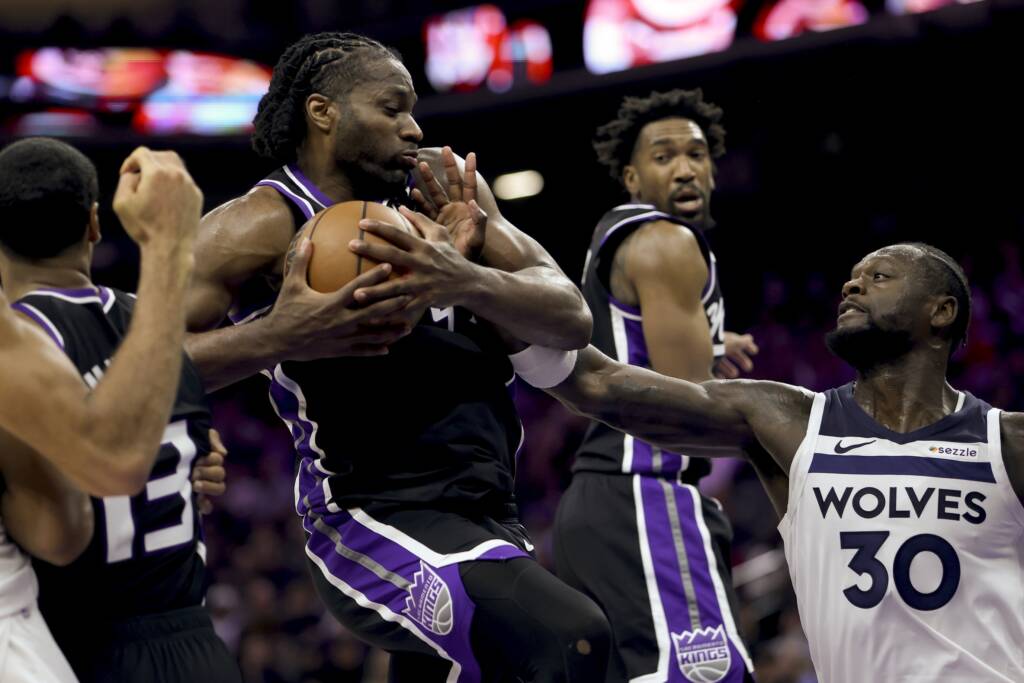
The Lynx were down four points with 27 seconds left in the game. Collier got the ball just three seconds later at the top of the arc. She drove left, and Alyssa Thomas poked at the ball with her left hand and seemingly deflected the ball clean.
However, in poking at the ball, she blocked Collier’s path, causing Collier’s left knee to knock into Thomas’s, and their bodies to collide. In normal circumstances, this is a “blocking foul” or a “loose ball foul,” because Thomas’s body came into contact with the offensive player. As Collier tumbled to the ground, her right foot got pinned, causing a gruesome-looking ankle roll.
However, the officials on the floor and the NBA’s official referees Twitter account decided it was a clean steal and no foul.
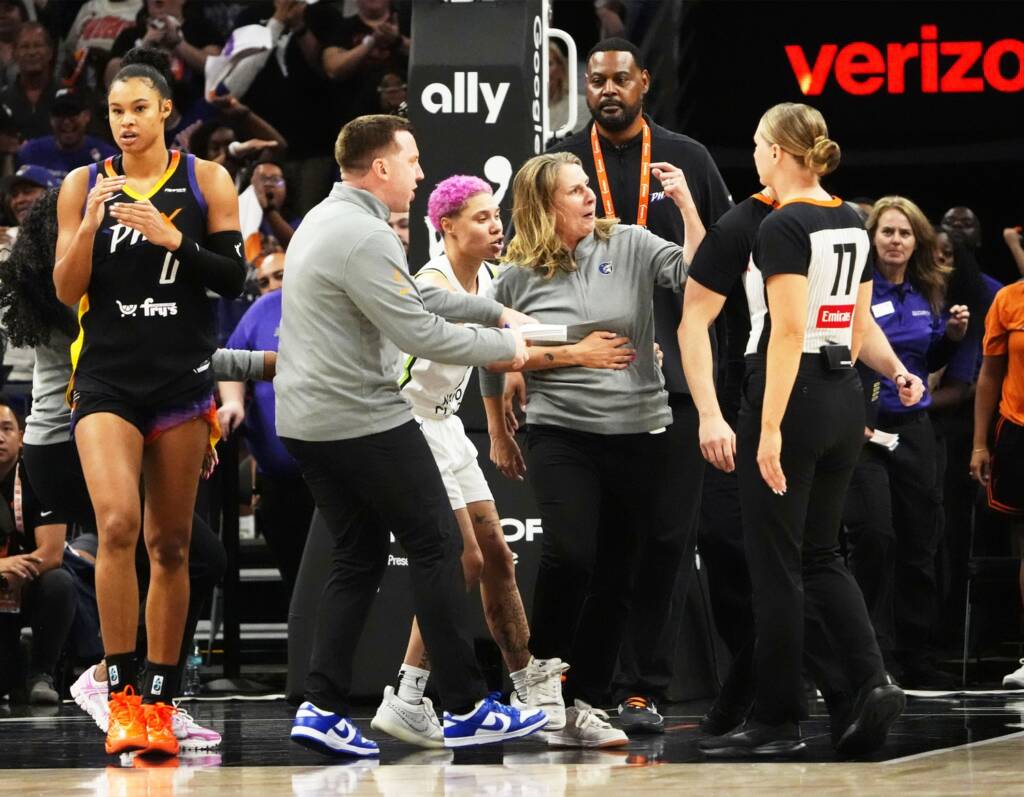
Reeve came to Collier’s defense with only 21 seconds remaining and got ejected. Collier hobbled down the tunnel with the assistance of training staff, leading Reeve’s postgame comments.
However, this was just the boiling point. Through the first half of the game, the Mercury and Lynx were playing ultra-physical. Both teams were grabbing and attempting to enforce their will, resulting in 12 first-half fouls.
Reeve received a technical after an incident where Thomas was noticeably thrusting her body into Collier, which resulted in a turnover off Collier and a no-call.
The Mercury had ten free throws in the first half, and the Lynx had six. Natisha Hiedeman had five of those six free throw attempts.
The second half quickly devolved into an even more chippy rock fight. The referees attempted to rein in the physicality by issuing four fouls in the first two minutes of the third quarter, which included three against Phoenix.
However, after the flurry of whistles, they let them play again. They only called 13 more fouls in the final 18 minutes, and they called four on Collier.
The lack of control in the game led players like Bridget Carleton to come dangerously close to getting a technical foul for bumping back against Satou Sabally. It also allowed a bigger Mercury team to continue punishing the Lynx with their physical play.
The pent-up frustrations eventually boiled over for Reeve, who had had enough after Collier’s injury. Still, she’s not the first coach to mention the frustrations of the officiating. Natalie Nakase spoke at length after Game 1 of the Lynx-Golden State Valkyries series about the lack of fair officiating, pleading with the officials for “a fair fight.”
Las Vegas Aces coach Becky Hammon echoed Reeve’s frustration.
“Most of my assistants come from the NBA, and they’re like the level of physicality would not fly on the NBA, there would be fights,” said Hammon. “I’m not saying we’re not fouling. … I’m saying it’s out of control.”
The Aces also played on Friday night, and league MVP A’ja Wilson and Collier shot one free throw combined despite playing 74.5 minutes combined and leading both of their teams in usage. The only player to shoot more than six free throws out of all four teams on Friday night was Sabally, who took 11.
There may be an easier explanation to officials than meets the eye.
The WNBA contracts out its officials through the NCAA. There is next to no transparency for the officials. For reference, in the NBA, you can look up career officiating statistics and officials’ experience, what their records are with certain teams, and how they call the game. In general, you get a feel for who the official is and how they call a game.
However, that doesn’t exist in the WNBA. There is no public database to evaluate officials. For example, in Friday’s Lynx game, lead official Issac Barnett has one NBA game of officiating under and is primarily an official in the G league, which has different rules and regulations than the WNBA. I didn’t get this information from the WNBA or basketball reference, by the way. I had to go to Barnetts’ LinkedIn.
Randy Richardson, the second-in-command on Friday night, has a basketball reference page stating that he officiated six NBA games in the 2017-18 season. However, beyond that, there appears to be no trace of him on Google or the WNBA website.
Jenna Reneau was third in the crew list and arguably has the most experience with 30 NBA games under her belt. She appears on ref-metrics and primarily officiates college and G League games. Again, I had to go to her LinkedIn to find this information.
This is the biggest issue with WNBA officiating. They are pulling officials from other leagues to cobble together a crew to officiate games. From what I can find, officials often lack extensive experience. Even if they do have experience, it’s all cloaked under a shroud of mystery. It not only makes it hard for the public to trust the officials, but it also makes it hard for the players and coaches to trust the officials.
Therefore, it’s not hard to see why Reeve boiled over. For a semi-finals game in a professional sport to be officiated by college and NBA G League officials is malpractice. Legacies and millions of dollars in endorsements and future contracts are at stake. So is Collier’s health.
The Lynx and Mercury will play on Sunday, and the game is likely to have a similar feel, with too much physicality bordering on dangerous levels. Reeve won’t coach the game because the league suspended her. Still, change doesn’t happen without someone addressing the issue, and Reeve did so head-on.