
It shouldn’t come as a surprise that the Green Bay Packers’ pass rush has struggled since Micah Parsons tore his ACL at Mile High. What we’re seeing now is the natural result of a unit that finished in the bottom 10 in pass-rush win rate a year ago, now operating without Kenny Clark and Devonte Wyatt anchoring the interior.
“This what I say. For the rest of the season, what we got? Three more opportunities? Watch how the front play,” Rashan Gary said after the Packers lost 34-26 in Denver.
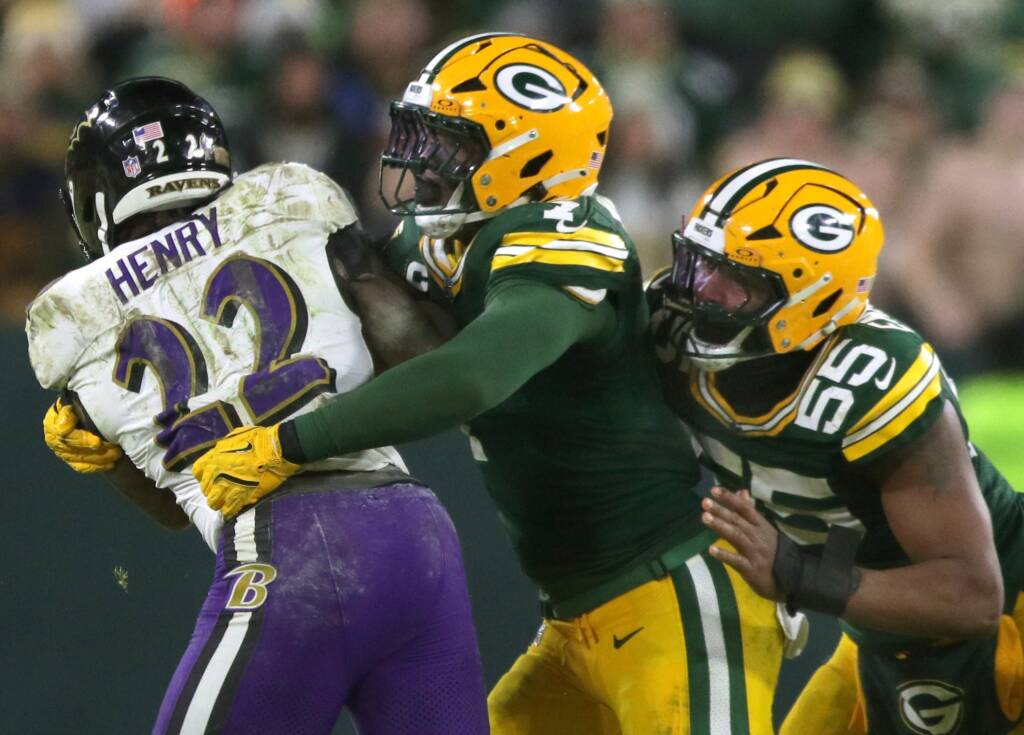
The opportunities Gary referenced haven’t translated into results. He hasn’t made the most of them, and his play has become the most disappointing aspect of Green Bay’s pass rush. Gary hasn’t recorded a sack since October 26, and his impact against the run has been just as inconsistent. That showed up again on Saturday, most notably on Derrick Henry’s fourth rushing touchdown, when a 198 lb. backup wide receiver was able to seal Gary off at the point of attack.
That disconnect showed up in the usage as well. Gary was benched for stretches against the Baltimore Ravens and finished the game playing just 45% of the defensive snaps. That’s concerning when viewed alongside his contract situation; Gary is slated to make $19.5 million next season, a figure that comes with expectations of being a cornerstone player. Right now, he hasn’t consistently looked like one of Green Bay’s top two edge defenders, and that assessment doesn’t even factor in Parsons’ absence from the lineup.
With that in mind, Matt LaFleur and Jeff Hafley may need to consider adjusting the rotation moving forward, including giving Kingsley Enagbare more playing time at Gary’s expense. Enagbare has been more impactful as a pass rusher and against the run, consistently playing with better leverage, effort, and finish.
Enagbare’s role has grown significantly as the season has progressed. After being labeled as a trade candidate in October and playing just 25.3% of defensive snaps through Weeks 1-5, his workload nearly doubled over the middle portion of the season. From Weeks 7-13, he was on the field for 46.3% of Green Bay’s defensive snaps, producing 18 total tackles, five quarterback hits, three tackles for loss, and a sack during that span.
“You can feel his impact,” LaFleur said in October via The Leap’s Jason B. Hurschhorn. “…He plays with great physicality. He uses his hands well. He’s been a real force in our run defense.”
The case for Enagbare earning more playing time goes beyond the numbers. On tape, he’s consistently closer to the action as plays develop – setting edges, staying engaged, and finishing around the ball. By contrast, too many of Gary’s snaps end with him trailing the play, often five yards behind the quarterback with no realistic chance to affect the outcome. One player is impacting plays as they unfold; the other is reacting after the moment has already passed.
One ongoing point of discussion among Green Bay’s fanbase has been Gary’s effort and intensity on a snap-to-snap basis (as seen in the tweet below). Maybe that critique is fair. But the more important – and more objective – reality is that Gary simply hasn’t looked like the same player since tearing his ACL in 2022.
We can debate effort and mentality, but the tape shows a clear decline in burst and closing speed compared to his pre-injury form. And when evaluating performance, those physical limitations matter far more than subjective judgments. This analysis isn’t about emotion or character – it’s about what’s visible on the field.
Matt LaFleur took the podium on Sunday and shared that Gary is not dealing with an injury. That only sharpens the conversation around his performance. If the production and impact don’t improve, the coaching staff may have little choice but to adjust the rotation. At some point, it becomes reasonable to consider Lukas Van Ness and Kingsley Enagbare taking on larger roles on the outside if they continue to offer more consistent energy and effectiveness.


