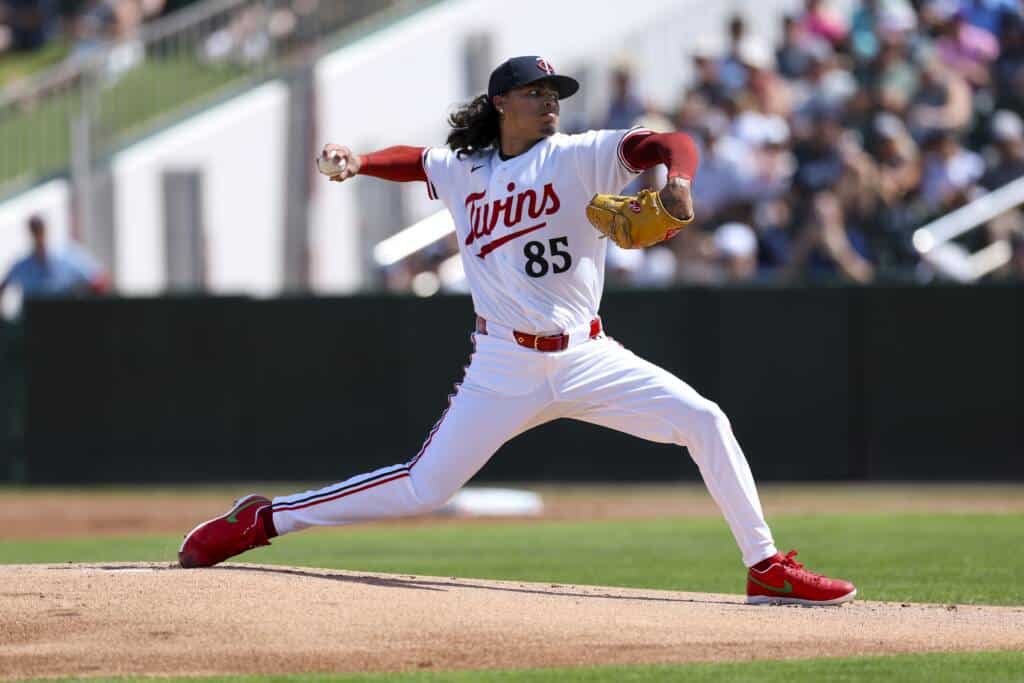
Before the first game of this week’s series between the Minnesota Twins and the Chicago White Sox, Twins.TV began the broadcast with a spirited video history of the fierce rivalry between Ozzie Guillen’s Chicago White Sox and Ron Gardenhire’s Minnesota Twins, summarized by Cory Provus:
Throughout the early 2000’s, these two teams had some fierce battles with playoff stakes on the line.… Now, these two teams are filled with young talent, trying to make their way back to the top of the Central, and renew this rivalry.
After the first four-game bout in Chicago, the rivalry hasn’t quite renewed…yet.
Despite years of agony and the worst baseball in major-league history, the 2026 White Sox have collected themselves, vaulted the Twins in the standings, and appear to carry a proper threat to win a Wild Card spot.
Over the course of the surprisingly significant series, Chicago outscored Minnesota 27-10. The White Sox put great swings on good pitches. They punished mistakes. Munetaka Murakami added three home runs to his AL-best tally. They’ve won nine of their last 15 and currently sit two games over .500 in sole possession of a Wild Card spot.
Still more promising for the Pale Hose: They’re now 8-3 against the AL Central. They have yet to play the Cleveland Guardians or the Detroit Tigers. Still, after throwing ice water on the fire Minnesota kindled in Boston, the Sox look seriously, legitimately dangerous.
Murakami, who will center most conversations about the White Sox’s merits, is but one part of a notably strong core. Analyst Trevor Plouffe made this assessment during the home half of the eighth inning on Thursday’s broadcast, when the series was all but lost for the Twins:
I think what we’re seeing here with the White Sox: No. 1, their starting pitching was fantastic this series; you have this infield that’s basically set between Murakami, Montgomery, Vargas, and Meidroth. And the outfield, a bunch of guys you can platoon depending on the opponent…Venable’s got a lot to work with.
Here, Plouffe credits the White Sox with a competitive feature teams have spent 120 years building, and long seasons refining: an everyday infield. Even the New York Yankees had to send down Gold Glove-winning shortstop Anthony Volpe — a move almost as seismic as Minnesota’s option of Royce Lewis — to sort matters out in their infield, and keep pace with the ascendant Tampa Bay Rays.
The White Sox don’t have that problem. Roster anchor Colson Montgomery deserves every All-Star vote he gets after his 13 home runs and 47 RBI to start this season. He had a quiet series against the Twins — a footnote to remember, if a proper rivalry is to emerge — but the depth of the White Sox permits some streakiness on the part of individuals. A down series from one player or another isn’t likely to cost the team in the long run when the roster is so consistent throughout. Plouffe credits the White Sox with this consistency. If he’s on target, Chicago’s infield of “young talent” will become household names before too long.
Most of the Twins’ “young talent” currently plays for the St. Paul Saints, and therein lies the key contrast. Still, potential long-term Twins heroes have begun to awaken at Target Field already.
The Twins are unlikely to option Austin Martin and Brooks Lee, given their current — and improving — level of contribution. Both had standout series in Boston. Like Montgomery, Martin stuttered a little in Chicago, but continues to get on base (.389, 10th in AL). Brooks Lee added two more extra-base hits and four more RBI, authoring the Twins’ best moment of the series:
Still, aside from an errant home run or sacrifice fly, the Twins didn’t really have any signature moments in high-leverage situations. Minnesota’s best starters were on point in Games 1 and 2; Joe Ryan and Zebby Matthews continue to pitch well and keep the club in games. Conversely, the bats and their approach to the White Sox’s young flamethrowers did not impress.
Tempers may well have flared if the games had been closer. Still, there was more vinegar in this one exchange between the Twins and Boston Red Sox than in the entire series in Chicago.
In Boston, Minnesota played some of its best baseball against a wayward opponent. In Chicago, with divisional standings at stake, they disappointed.
A return to the competitive atmosphere of the 2000s AL Central — tightly contested games, marquee matchups, insults-into-nicknames, and bad blood between two very competitive clubs — still sits beyond the horizon of next year’s labor issues. The Twins are still deep in assembling their next roster, while the White Sox have seemingly found the foundation of theirs.
The Twins may have had a poor showing in Chicago this week, but as always, baseball offers its wayward souls a way to reclaim the adventure. Round 2 of this not-quite-rivalry begins next week at Target Field. June 1 seems like the perfect date to renew it properly.