
Change can make people uncomfortable. It’s easier to settle into a routine and stick with it day after day, whether it’s better for us in the long run or not. For Green Bay Packers general manager Brian Gutekunst, many past offseasons have followed a pattern: finding players in their primes, loading up on draft picks, and seeking value on the margins.
This offseason has been a pivot away from that comfort zone.
The Packers try to strike in free agency by finding players at or near their primes. That was certainly the case two years ago when Gutekunst made two big splashes with running back Josh Jacobs and safety Xavier McKinney. Jacobs was 25 years old when he signed with Green Bay and at the peak of his powers. McKinney was also 25 and trending toward being an All-Pro, a feat he would accomplish in his first year with the Packers.
This offseason, Gutekunst threw a change-up when everyone was expecting another 98 mph fastball on the outside corner.
The Packers traded for linebacker Zaire Franklin, who will turn 30 in July. A model of consistent play in Indianapolis, Franklin is coming off a less-than-inspiring season in 2025. However, the Packers clearly believe he’s still capable of being an impact player.
In free agency, the two biggest names signed were cornerback Benjamin St-Juste and defensive tackle Javon Hargrave. St-Juste will be 29 in September, and Hargrave has even more seasoning at age 33.
There’s a running joke among Packers fans that once a player turns 30, the team will start ushering them toward the door. There are exceptions to the rule with certain positions like quarterback and kicker. However, in large part, if you’re a Packers wide receiver, running back, or cornerback turning 30, don’t buy any green bananas.
But this offseason, Gutekunst has chosen to add more of those players to the mix.
It’s not the only way Gutekunst has strayed from the norm this offseason.
Gutekunst has never been shy about adding as many draft picks as possible to the board every year. If he enters a draft with seven picks, he’d prefer to wind up with 10.
This year, without a first-round pick after the Micah Parsons trade last offseason, Gutekunst still entered the draft with eight selections. When Day 3 of the draft concluded, Gutekunst and the Packers had made six picks, the fewest in his tenure as general manager.
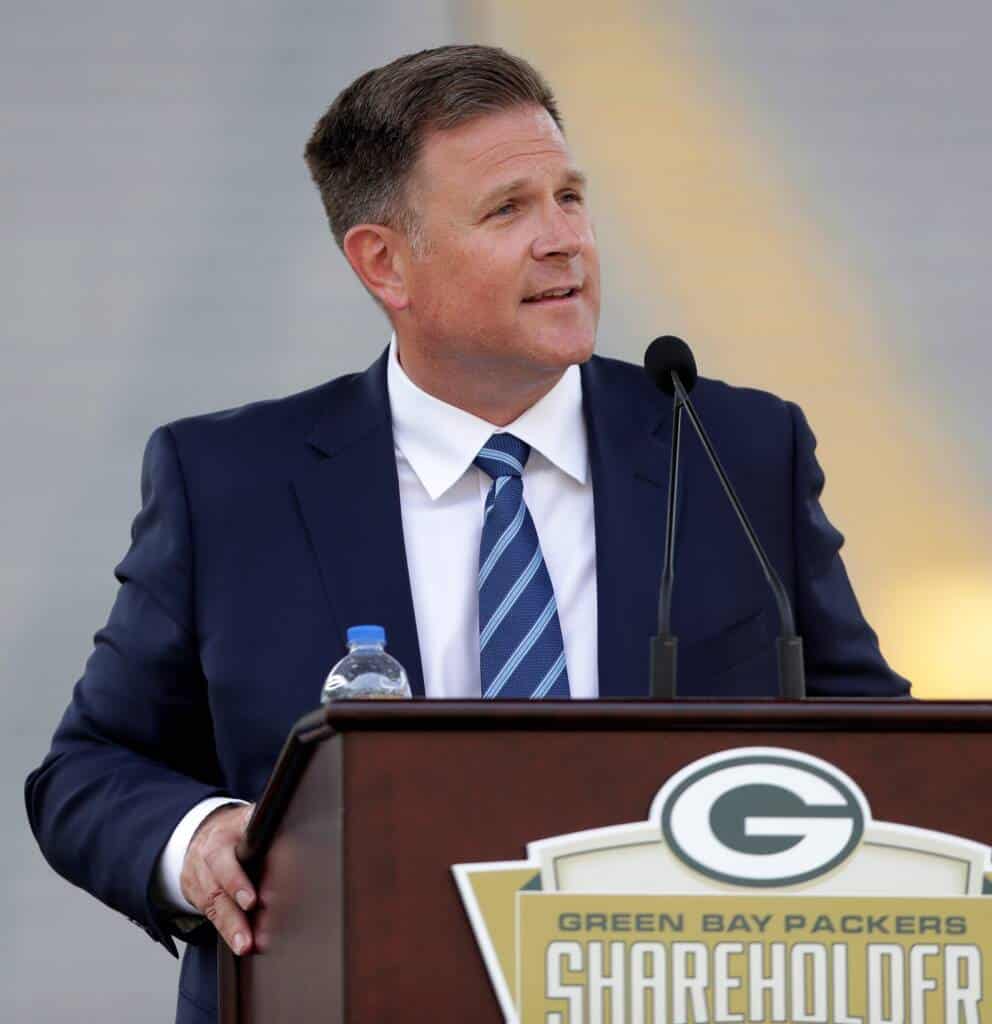
A general manager who prides himself on injecting plenty of resources into the draft sounded perfectly content at the podium after the draft, with only six drafted rookies coming into the building. He joked that he would have to compensate next year.
I’m probably going to try to get to twenty-some picks next year. So I don’t think it’s going to change the way I’m really looking at things. This was a unique year — and it certainly wasn’t lost on me as we went through it that we ended up with six and not more.
Gutekunst is self-aware enough to know how his habits and methods are perceived by the fanbase and around the league. Before this year’s selection of six picks, Gutekunst had averaged 10 picks per year in the draft. This wasn’t some small difference. It was drastic and continued a theme of an offseason where Gutekunst has been more unpredictable.
It might just pay off.
Clearly, something triggered this change of pace. Perhaps the sour aftertaste of the post-season heartbreaker in Chicago. It’s plausible he watched that game and thought adding players with more proven experience could help the Packers take the next step. It’s a team that’s made the playoffs all three years Jordan Love has been the starting quarterback. Still, he has yet to even sniff a conference championship appearance during that time.
Whatever the reason, Gutekunst deserves time to tinker with his strategy and see if this plan of attack works. Change can be intimidating, but he doesn’t look scared.