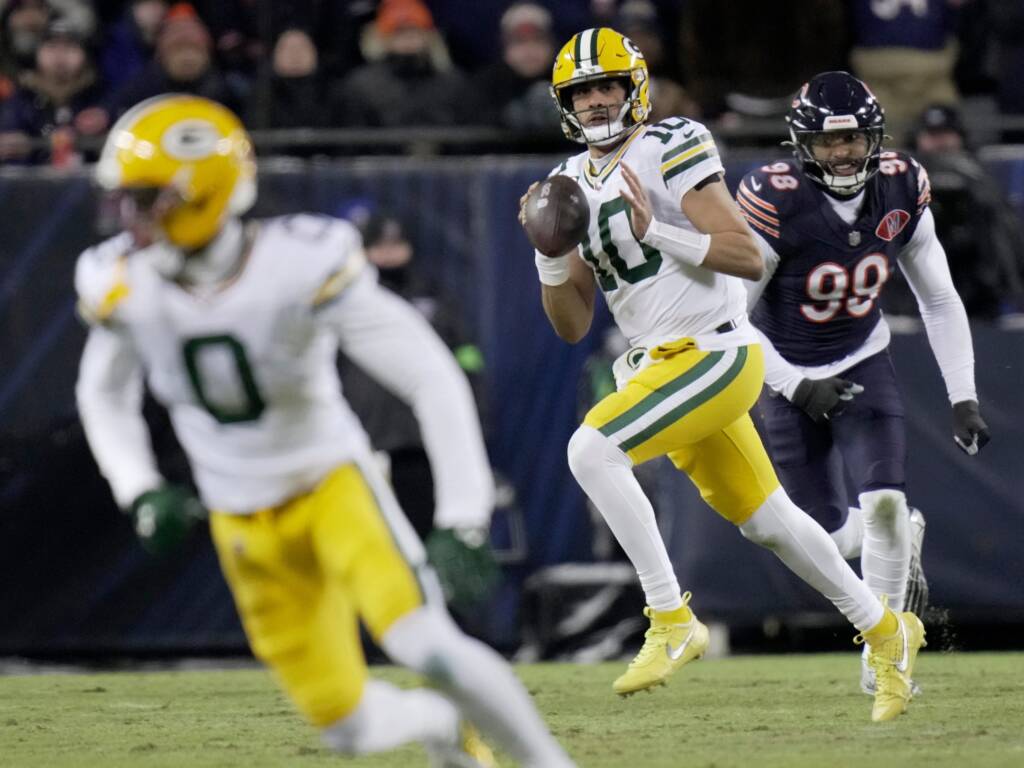

For the Green Bay Packers to have a chance of making a deep postseason run, the offensive line needs to play much better in 2026.
Injuries, out-of-position players, and depth concerns kept Green Bay’s line from building consistency. By season’s end, the Packers entered the playoffs as one of the lowest-graded offensive lines for postseason teams and finished the season as PFF’s 19th-best line.
To bounce back, the Packers need their starters to stay healthy and perform much more admirably than last season. Even then, wear and tear is a familiar foe for offensive linemen, so the Packers need their depth players to improve as well.
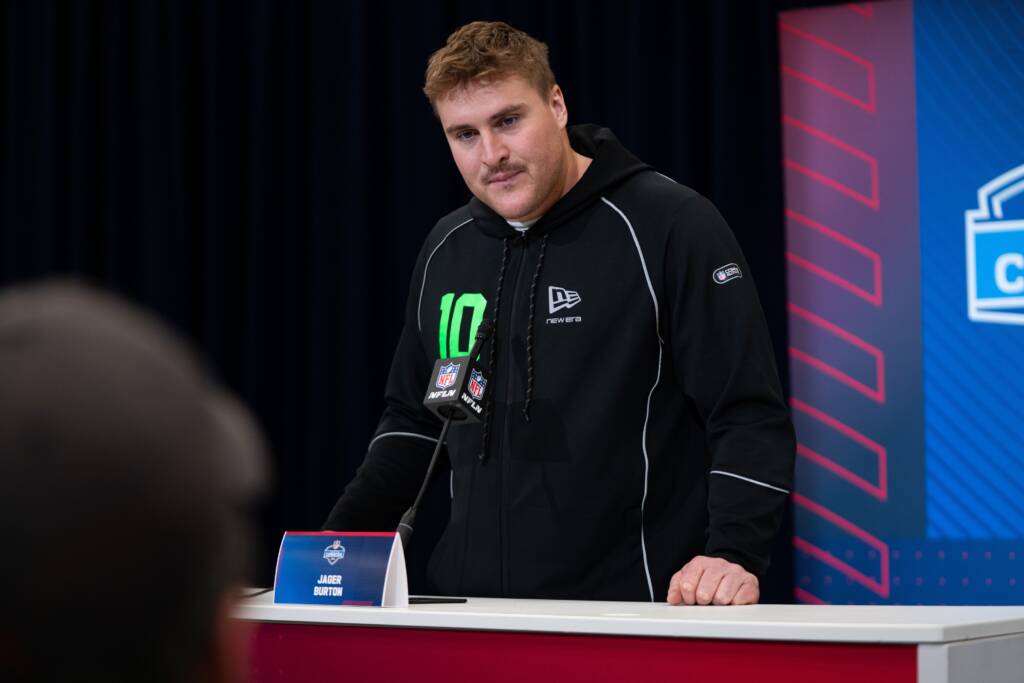
The good news is the Packers got a new toy in fifth-round pick Jager Burton, a versatile interior lineman whom they slotted into the first-team offense during OTAs and minicamp. Expecting a Day 3 rookie to be an impact player on Day 1 is often a fool’s errand, but Burton is already impressing.
Good news for one player is often bad for another, though. Burton’s rise is good for the Packers, but it’s bad news for third-year Jacob Monk. Like Burton, Monk looked ready to compete along the interior as a rookie. Unfortunately, Monk hasn’t been a reliable contributor even as a “break in case of emergency” player. The Packers need depth along the line, but could Burton’s rise mean the end of Monk’s time in Green Bay?
Monk started his Green Bay tenure in a similar spot to Burton, a fifth-round offensive lineman with the potential to be a starter at any of the three interior spots. Beyond the versatility, Monk was highly experienced and looked NFL-ready. There was even a thought that Monk could come in immediately and compete at center, with Josh Myers‘ performance leaving something to be desired.
Instead, Monk remained a fringe option on the roster, eventually becoming a healthy scratch on game day. By the end of that 2024 season, the depth along the interior line was a major concern, especially in the Wild Card loss in Philadelphia. Still, the Packers didn’t view Monk as a viable option.
We all tend to get new toy syndrome and believe our team’s Day 3 rookies might come in and surprise everyone. It didn’t work out for Monk in his rookie year, but that wasn’t a reason to lose sleep.
Monk got a fair shot to compete in 2025. With Elgton Jenkins missing much of the off-season before sliding over to center full-time, there were plenty of opportunities on the interior.
They preferred then-right guard Sean Rhyan over Monk as the backup center, with Monk filling in with the second-team offense at guard. It wasn’t pretty, especially during the preseason opener against the New York Jets.
It showed that perhaps Monk wasn’t the do-it-all interior lineman they drafted him to be.
Monk’s inability to stand out positively and a midseason injury limited his snaps. Only toward the end of the season did Monk get somewhat meaningful snaps. He got six snaps at left guard toward the end of the Baltimore Ravens game and all 51 starting center snaps in the regular-season finale against the Minnesota Vikings.
It was a preseason-like environment in Week 18, with Green Bay sitting everyone they could, their Wild Card round seed locked in, and Minnesota eliminated from the playoffs. Still, Monk looked perhaps the best he had at center.
Unfortunately, he suffered a biceps injury in the Wild Card Game, and Green Bay’s season ended shortly after.
After releasing Elgton Jenkins, the Packers needed a starting center. Instead, they opted to sign Sean Rhyan to a lofty deal to continue manning the spot. Had the Packers felt Monk was ready to truly compete for the job, Rhyan may not have been offered such a deal.
Still, thanks to a lack of other options, that alone still would have kept Monk in the backup conversation.
Drafting Burton hurt Monk’s position even more. Expected to play the same role but with a higher athletic ceiling, Burton already brought a solid foundation to get excited about. He’s taken first-team reps at multiple shots, and he’s looked the part. Burton has a realistic chance to compete for not just a backup role but perhaps a starting spot in the near future.
Meanwhile, Monk is still rehabbing from his bicep injury and spent OTAs and minicamp on the sideline. While Burton’s stock is soaring, Monk’s is sadly plummeting.
There still isn’t much proven depth along the interior. Still, even entering Year 3, it’s hard to say Monk has an edge on anyone. With poor play at guard and an increasingly difficult chance to compete at center, Monk might not make the roster without a visible leap during training camp.
Ideally, Monk can heal his body, regain some confidence, and enter camp ready to compete. Competition gets results in the NFL, and maybe real competition from Burton can help Monk take the next level. Other than Burton, there isn’t anyone else truly threatening to raise the interior’s floor, either.
Current evidence is stacked against Monk, though. Barring a major paradigm shift, Monk may find himself on the practice squad or on another team this summer.