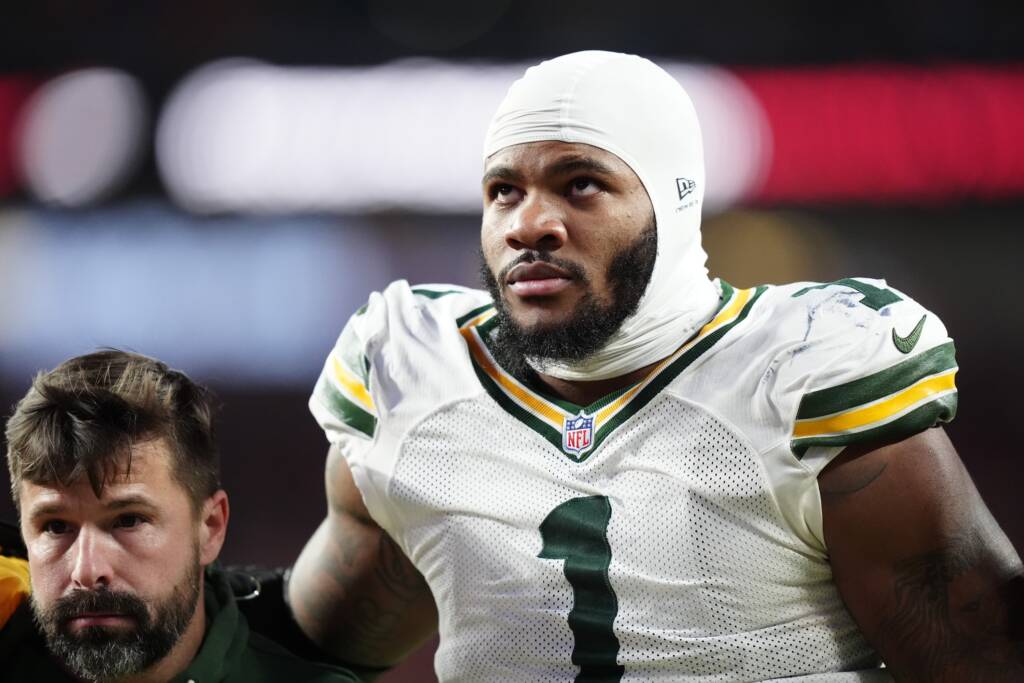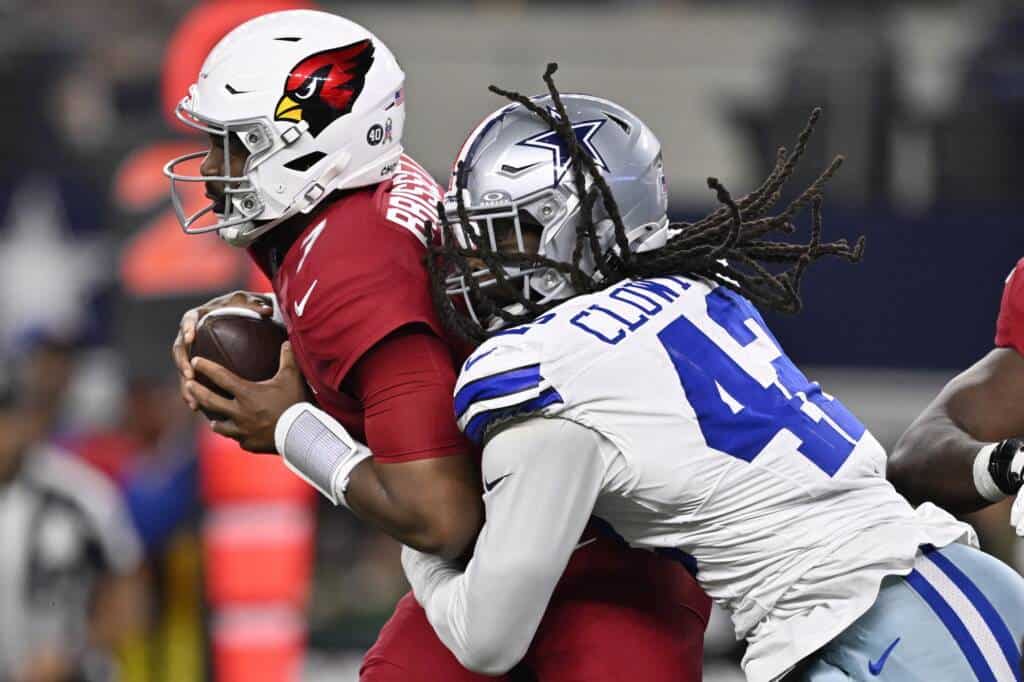

The Green Bay Packers have entered the 2026 season with legitimate Super Bowl aspirations. Still, generating pass rush is a concern for the team. It remains the biggest weakness holding the Packers back from being true contenders. Whenever a contender appears to have a flaw, veteran free agents inevitably become part of the conversation. One of the biggest names still available is veteran edge rusher Jadeveon Clowney, and insiders have speculated that Green Bay could be a landing spot for him.
On the surface, the connection seems logical. Clowney has enjoyed an accomplished NFL career, has experience in multiple defensive systems, and has proven capable of making an impact against both the run and the pass. For a Packers team searching for more production outside of Micah Parsons, signing a recognizable veteran may seem like an easy solution.
However, the Packers should resist the temptation. While Clowney’s résumé deserves respect, signing him at this stage would be more about chasing a familiar name than finding the right fit. There are several reasons why: His age, declining pass-rushing production, the development of Green Bay’s young edge defenders, and the team’s long-term philosophy.
There’s no denying that Green Bay wants more from its defensive front. While they employ Micah Parsons, one of the premier pass rushers in all of the NFL, exactly how long he is going to miss is still uncertain. Consistency with the rest of the edge room has been, and will continue to be, an ongoing question. Even so, expecting Clowney to solve those issues would be unrealistic.
Throughout his career, Clowney has been an outstanding run defender and an athletic disruptor, but he has rarely been the elite sack producer his physical gifts suggested he could become. His value has always extended beyond the stat sheet. Still, the Packers aren’t only looking for a solid all-around edge defender. They need someone capable of consistently finishing plays and putting game-changing pressure on opposing quarterbacks.
At this point in his career, the 33-year-old Clowney is no longer that player.
While he can still contribute in stretches, his impact has become increasingly situational. Counting on him to provide double-digit sacks or dramatically transform the defense would likely lead to disappointment.
Father Time eventually catches up to every NFL player, particularly edge rushers whose games rely heavily on explosiveness and athleticism.
Clowney has accumulated significant mileage over the course of his 12-year NFL career. Multiple injuries have forced him to miss games throughout the years. While he’s shown tremendous toughness by returning to the field repeatedly, availability remains an important consideration.
The Packers have generally preferred investing in younger players who can contribute throughout a full season rather than relying on aging veterans whose workloads they must carefully manage.
Signing Clowney would almost certainly require limiting his snaps to keep him fresh. If Green Bay is searching for a dependable solution, that approach doesn’t align with what the defense needs over a long 17-game schedule. The 33-year-old has not played a full season since 2023 and has only done so twice in his career. If Green Bay is going to target a veteran stopgap, it should at least be someone likely to play an entire season.
Perhaps the biggest reason Green Bay should avoid signing Clowney is the players already on the roster. General manager Brian Gutekunst has consistently built this team through the draft, trusting young talent to develop rather than blocking their opportunities with short-term veteran additions.
The Packers have invested valuable draft capital and developmental resources into their edge room. Players like Lukas Van Ness continue to work toward becoming every-down contributors, while Brenton Cox Jr. has flashed intriguing upside whenever Green Bay gives him an opportunity. Second-year men Barryn Sorrell and Collin Oliver need snaps to continue to develop. They are the future of Green Bay’s pass rush, not the aging Clowney.
If Green Bay truly believes Van Ness can still become the impact player they envisioned when selecting him in the first round, then he needs meaningful snaps – not another veteran standing in front of him. The same applies to Cox, Sorrell, Oliver, and newcomer Dani Dennis-Sutton, whose growth depends on live game experience rather than watching from the sideline.
At some point, a franchise has to trust its own evaluations. If the Packers don’t believe their young edge rushers are ready now, when will they ever be?
Even if Clowney were willing to sign for a reasonable contract, every dollar spent represents resources that can’t be used elsewhere. The Packers must continue thinking beyond just one season. Extensions for core players such as Tucker Kraft and Devonte Wyatt are looming, and maintaining salary cap flexibility has been one of the organization’s strengths during Brian Gutekunst’s tenure.
Using cap space on a veteran who may only provide rotational production doesn’t represent the best return on investment.
Instead, Green Bay would be better served preserving financial flexibility for potential in-season additions or unexpected injuries. Championship teams often make roster moves during the season, and having available cap room can become a significant advantage.
Another often-overlooked factor is how seamlessly a veteran fits into a defensive system.
Learning a new playbook, adapting to different terminology, and building chemistry with teammates all require time. Those adjustments typically occur during training camp, and joining later in the offseason or during the regular season makes the transition even more difficult.
Green Bay’s defense is expected to become more cohesive as players gain experience within the system. Introducing a veteran who hasn’t participated throughout the offseason could disrupt that continuity.
Even if Clowney eventually settled into a role, there’s no guarantee his production would justify the adjustment period. The Packers have spent the last several years building one of the NFL’s youngest rosters. That philosophy has helped create a team capable of competing for multiple seasons instead of chasing quick fixes every offseason.
Signing Clowney would represent a departure from that approach.
Green Bay doesn’t need another respected veteran simply because his name is recognizable. The organization needs its recent draft picks to become impact players. If the Packers reach their championship ceiling, it will be because their young defensive front takes meaningful steps forward – not because a 33-year-old free agent arrives to play a limited role.
There will undoubtedly be calls throughout the season for Green Bay to pursue veteran help if the pass rush starts slowly. That’s understandable. Fans naturally gravitate toward recognizable names, especially former Pro Bowl players with impressive résumés. If they really want an outside name to add to this defensive front, then continue to talk the Arizona Cardinals into trading Josh Sweat. He’s younger, can be a part of the longer-term future, and is much more productive.
Jadeveon Clowney has put together an excellent NFL career and deserves respect for the impact he’s made over more than a decade in the league. At his peak, he was among football’s most disruptive defensive players, capable of changing games with his athleticism and versatility.
However, this version of the Packers needs development more than nostalgia.
Green Bay’s front office has invested heavily in building a young, athletic defensive front. Those investments won’t pay off if the organization continues looking outside the building whenever adversity strikes.
Unless injuries completely decimate the edge rotation, the Packers should stay committed to their current roster, trust the players they’ve drafted, and allow their young pass rushers to prove whether they can become the difference-makers the franchise believes they can be.
Jadeveon Clowney may still have something left to offer an NFL team. However, that team shouldn’t be the Green Bay Packers.