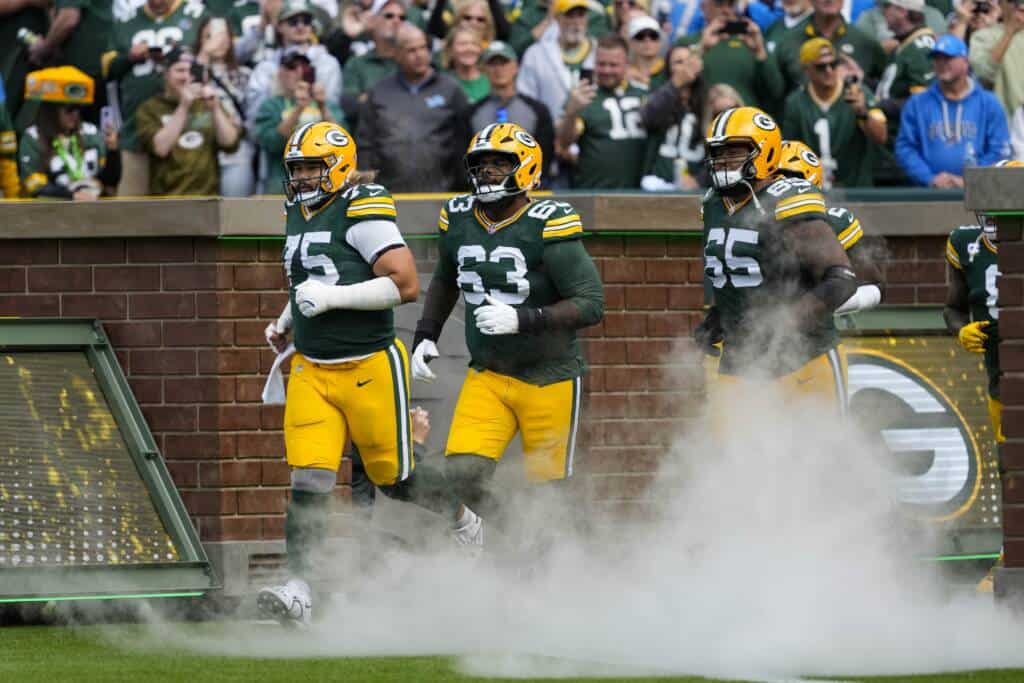

The Green Bay Packers have built one of the NFL’s strongest reputations when it comes to identifying and developing undrafted free agents. It’s not an accident that they have a 21-year (and counting) streak of carrying an undrafted free agent on their Week 1 roster. That history alone makes every undrafted signing worth monitoring during training camp, and one of the more fascinating names in this year’s class is R.J. Maryland.
From players like Sam Shields and Tramon Williams to more recent contributors like Malik Heath and Emanuel Wilson, Green Bay has consistently shown a willingness to give overlooked prospects legitimate opportunities to earn roster spots. Still, at first glance, Maryland faces an uphill climb.
The Packers already possess a deep tight end room, at least on paper. It’s led by Luke Musgrave, Tucker Kraft, and developmental depth pieces who already understand the system, like Drake Dabney and Josh Whyle.
But dig deeper into Maryland’s skillset and athletic profile, plus the lack of depth in Green Bay’s tight end room beyond 2026. Also, look at how Green Bay likes to deploy offensive weapons. Then it becomes clear why the Packers were interested in bringing him in after the draft. There’s a very real path for Maryland to force its way into the conversation for a roster spot.
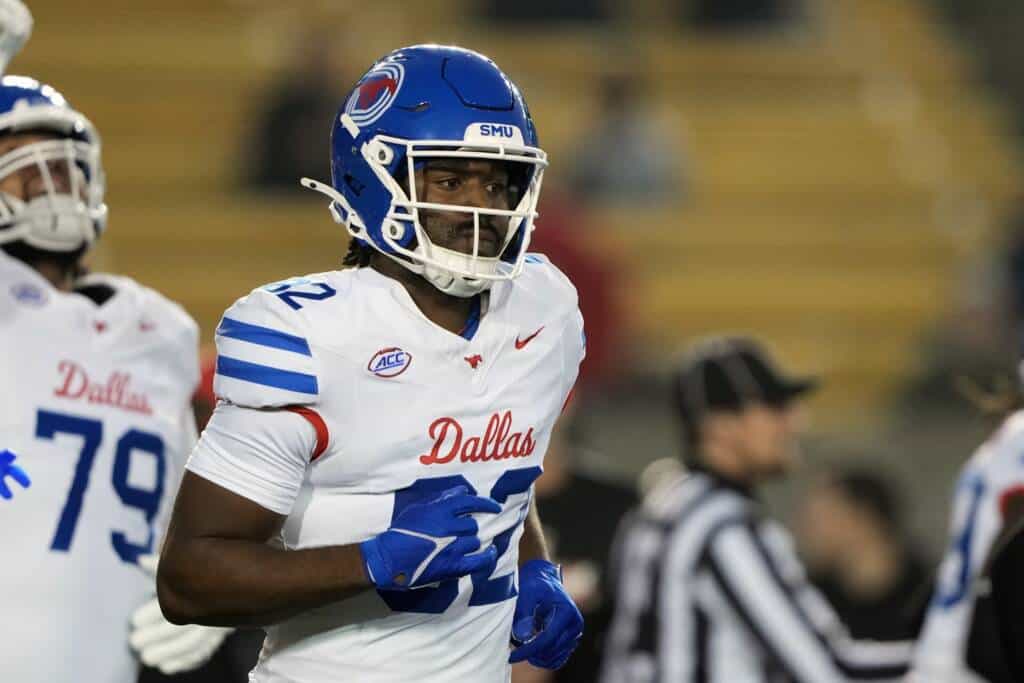
The former SMU standout entered the draft process with far more intrigue than the typical undrafted free agent. Maryland was one of four SMU players invited to the 2026 NFL Combine and finished his collegiate career as the school’s all-time leader in receiving yards and touchdowns by a tight end.
His production at SMU speaks to a player who was far more than a traditional in-line tight end. Maryland operated almost like a big slot receiver at times, creating mismatches against linebackers and safeties with his speed and route-running ability. That versatility is exactly what makes him intriguing in Green Bay’s offense.
At the combine, Maryland ran an impressive 4.51 40-yard dash, one of the best times among tight ends in the class. For a player standing around 6’4”, that kind of speed immediately grabs attention. The Packers have increasingly prioritized athletic versatility on offense under head coach Matt LaFleur. Their system values players who can line up in multiple spots and stress defenses horizontally and vertically. Maryland fits that mold perfectly.
In many ways, Maryland feels like a classic modern NFL “move” tight end. He’s not the bruising, overpowering blocker that teams traditionally looked for at the position 20 years ago. Instead, he thrives as a receiving weapon. SMU frequently used him detached from the formation, motioned him into space, and allowed him to attack mismatches in the middle of the field.
Before suffering a torn ACL during the 2024 season, Maryland looked like a potential mid-round draft pick with significant upside as a pass-catcher. That injury is ultimately a major reason why he went undrafted.
While Maryland returned in 2025 and still flashed receiving ability, some evaluators believed he lacked the same explosiveness and burst he displayed before his injury. He was forced to wear one of the biggest knee braces you’ll ever see for the entire season, robbing him of those traits. Teams likely viewed him as a developmental prospect who needed more time to regain full athletic confidence and improve the physical aspects of his game, particularly as a blocker.
The Packers have always valued traits and developmental potential over immediate polish. They are one of the few organizations comfortable allowing young players to grow over time. Maryland’s combination of athleticism, receiving instincts, and bloodlines makes him exactly the kind of player Green Bay likes to bet on.
His father, Russell Maryland, was the No. 1-overall pick in the 1991 NFL Draft and won three Super Bowls with the Dallas Cowboys before spending his final season in Green Bay. That football background shows up in R.J.’s understanding of spacing and how to work within an offense.
The biggest question is whether there is room for him on the final 53-man roster this year, or if they’ll try to sneak him onto the practice squad. The Packers are already heavily invested at tight end. Kraft has emerged as one of the emotional leaders of the offense and has developed into a complete player capable of blocking and stretching the field.
For all his warts, Musgrave remains one of the most athletic tight ends in football when healthy. Josh Whyle is back this year to round out the projected depth chart. Drake Dabney spent some time on the active roster last year, and Messiah Swinson is back after spending parts of the last two seasons with the team.
Because of that, Maryland likely isn’t competing directly for a top-three tight end spot. Instead, his battle will be for the final depth role, and possibly even as a hybrid player. Interestingly, some early reports from rookie minicamp indicated the Packers listed Maryland as a wide receiver rather than a tight end. That may seem minor on the surface, but it could reveal how Green Bay envisions using him. If the Packers view Maryland as a hybrid offensive chess piece rather than a traditional tight end, his odds improve significantly.
LaFleur loves versatility. Over the years, Green Bay has experimented with players who can motion across formations, line up in the slot, work from H-back alignments, and create matchup problems. Maryland’s athletic profile fits that style of offense extremely well. He may never become a dominant blocker attached to the line of scrimmage, but he doesn’t necessarily have to in order to carve out a role.
Instead, he needs to prove he can become reliable in several key areas.
First and foremost is special teams.
Every undrafted player fighting for the back end of the roster has to earn trust in the third phase of the game. If Maryland can contribute on kickoff coverage, punt-return units, or as a versatile personal protector type, his value increases dramatically.
Players who can only contribute offensively rarely survive as UDFAs unless they are overwhelmingly talented. Maryland must show the coaching staff that he can play multiple roles. Maryland only played 85 special teams snaps in his college career, so he will need to prove quickly that he has the ability to develop on teams.
Second, he needs to continue rebuilding his explosiveness after the ACL injury.
The athletic testing numbers suggest the straight-line speed is still there. However, NFL evaluators noted that his short-area burst and overall agility didn’t appear consistent on film after the injury. Another year removed from surgery could make a substantial difference.
ACL recoveries often take longer mentally than physically, especially for skill-position players who rely heavily on sudden change-of-direction movement. If Maryland looks noticeably quicker during training camp practices and preseason games than it did during portions of the 2025 college season, coaches will notice.
Third, he must improve as a blocker.
Blocking will most likely determine whether he can stick on the active roster rather than the practice squad. Green Bay asks a lot from its tight ends in the run game. The Packers heavily utilize outside zone concepts that require tight ends to seal edges, climb to linebackers, and sustain blocks in space.
Maryland is willing as a blocker, which coaches appreciate. Still, he lacks the functional strength and technique to win at the NFL level consistently. Fortunately for him, blocking can improve with NFL coaching and physical development.
The encouraging part is that the receiving ability is already legitimate. Maryland has natural hands, tracks the ball well, and understands how to find soft spots in coverage. His production at SMU was not manufactured solely through gimmicks. He routinely made difficult catches in traffic and showed the ability to create yards after the catch. Those traits tend to translate to the NFL, especially in offenses that prioritize spacing and motion like Green Bay’s.
There is also a realistic scenario where injuries create an opening. The Packers dealt with significant injury issues at tight end not long ago, and depth can disappear quickly in the NFL. All signs point to Tucker Kraft being ready for Week 1, but if he experiences a setback, it suddenly creates a roster spot.
The Packers have reportedly shopped Musgrave. With him entering his contract year, maybe they will make a swap at the end of camp if Maryland shows he can play. Even if he doesn’t crack the initial 53-man roster, he feels like an excellent candidate to stick on Green Bay’s practice squad while developing for the future.
Every summer, one or two undrafted players begin making noise once the pads come on. Maryland has already generated some early buzz following rookie minicamp, with analysts pointing to him as one of Green Bay’s more intriguing UDFA additions. His speed, receiving background, and positional versatility give him a fighting chance in a league constantly searching for offensive mismatches.
The path will not be easy; it never is. Yet every year someone finds their way. Green Bay’s roster is talented, and tight end is not a glaring need. But the Packers have never been afraid to keep players who earn their spot regardless of draft status. If Maryland can continue progressing physically, embrace special teams work, and flash his receiving talent during preseason action, he can make the coaching staff’s final decisions difficult.
And in Green Bay, sometimes that is all an undrafted free agent needs.