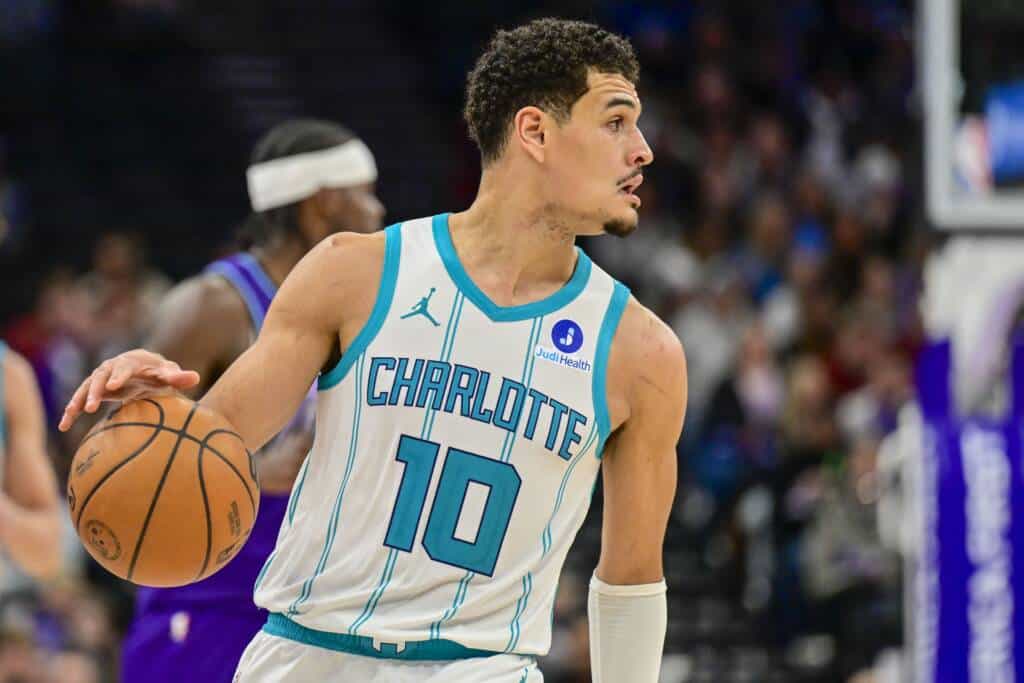

Josh Green is the kind of wing the Minnesota Timberwolves can plug into multiple lineup combinations without asking him to do too much. He brings defense, pace, simple offense, and enough shooting to make an impact. That makes him a useful fit for a roster built around bigger creators and versatile defenders.
Green’s biggest offensive value is that he keeps the ball moving and can finish actions quickly. He is a career 38.7% three-point shooter and has shown he can produce as a low-usage scorer, with 9.1 points per game in his best season and 4.3 points last season off the bench.
The Timberwolves don’t need Josh Green to run the offense. They need him to space the floor, make the extra pass, and attack closeouts when defenses overhelp. He also gives the Wolves some juice in transition. At 6’6”, Green can run the floor, fill lanes, and turn stops into easy points. That’s especially valuable on a team that wants to pressure opponents with defense and then get out in the open court.
Green earns his minutes on defense. Evaluators have long described him as a versatile, energetic defender who can check guards or bigger wings, stay engaged off the ball and rotate well. That kind of profile fits Minnesota’s identity, because the Wolves value length, activity and switchability on the perimeter.
However, he’s not just a hustle defender. Green’s ability to move laterally and handle different matchup types gives the coaching staff another option when opponents try to target smaller guards or attack mismatches on the wing. In a playoff setting, that can be the difference between a playable reserve and someone teams must hide on defense.
Green’s most realistic path is as a rotation wing who can soak up minutes when the Wolves need size and perimeter defense. Donte DiVincenzo’s injury creates an opportunity for Green to crack the rotation, and even suggested he could approximate some of DiVincenzo’s minutes early in the season.
That doesn’t mean he’ll replace DiVincenzo’s shot creation, but Green can help stabilize the second unit. He also has trade-value flexibility. Because he’s on an expiring contract, Minnesota can use him as a rotation piece, salary-matching filler, or a moveable asset if a bigger deal comes along. That gives him a slightly uncertain long-term status, but it also makes him useful now.
Green’s best role is probably as the first wing off the bench or as a spot starter when Minnesota wants more defense on the floor. He shouldn’t ask him to carry bench creation. However, they can trust him in lineups that need a connector, a chase-around defender, and a respectable corner threat.
If he shoots well enough to keep defenses honest, it should be easy to justify giving him minutes. The bottom line is simple: Green won’t drive the offense, but he is the sort of two-way wing contenders need. For the Wolves, that means he can help on both ends while fitting cleanly into a rotation that values defense, size, and taking care of the basketball.


