
It’s that time of year again, when men frantically schedule vasectomies, you fall in love with players you’ve never heard of at a university you couldn’t find on a map, and you find out who the cool high school teachers are. March Madness is upon us. Someone, please, tell my wife and dog I’ll see them on Monday. For four straight days on this glorious weekend, the second TV is wheeling out from the guest bedroom, the quad box is live, and calories don’t count in light beers.
For some reason, the NBA cowtows to the NFL all fall and winter, but won’t take a few days off for the first two rounds of the NCAA Tournament. The Minnesota Timberwolves host the Portland Trail Blazers on Friday and hit the road to take on the Celtics on Sunday. We could worry about where the Wolves are in the West standings at any given time or how many more games Anthony Edwards can miss with knee inflammation to remain eligible for All-NBA. Instead, for one magical weekend, let’s think about what kind of NCAA Tournament team this year’s Timberwolves would be.
Every year, the NCAA tournament is filled with every kind of basketball team you can think of. Blue-blood powerhouses, mid-majors, Cinderellas. You have young teams, old teams, fast and slow teams. Teams with coaches you want to punch in the face. And one or two teams with a coach you would follow into intergalactic battle.
The Timberwolves have been on a roller coaster all season. They started the season a disappointing 10-8 before turning things on in the winter months. Between November 27 and March 5, Minnesota had the fifth-best record in the NBA, going 30-15. Since then, the Wolves have dropped four of the last seven games and are limping through the stretch run in a highly competitive Western Conference playoff race.
They’ve got a recent tournament pedigree. Minnesota has made the playoffs four straight years and advanced to the final four the last two seasons. They have an All-American guard in Anthony Edwards, who is third in the NBA in scoring, averaging 29.5 points a night. They also have Rudy Gobert, the classic random foreign center that people sleep on until he’s dunking on your head and blocking your shot into the third row.
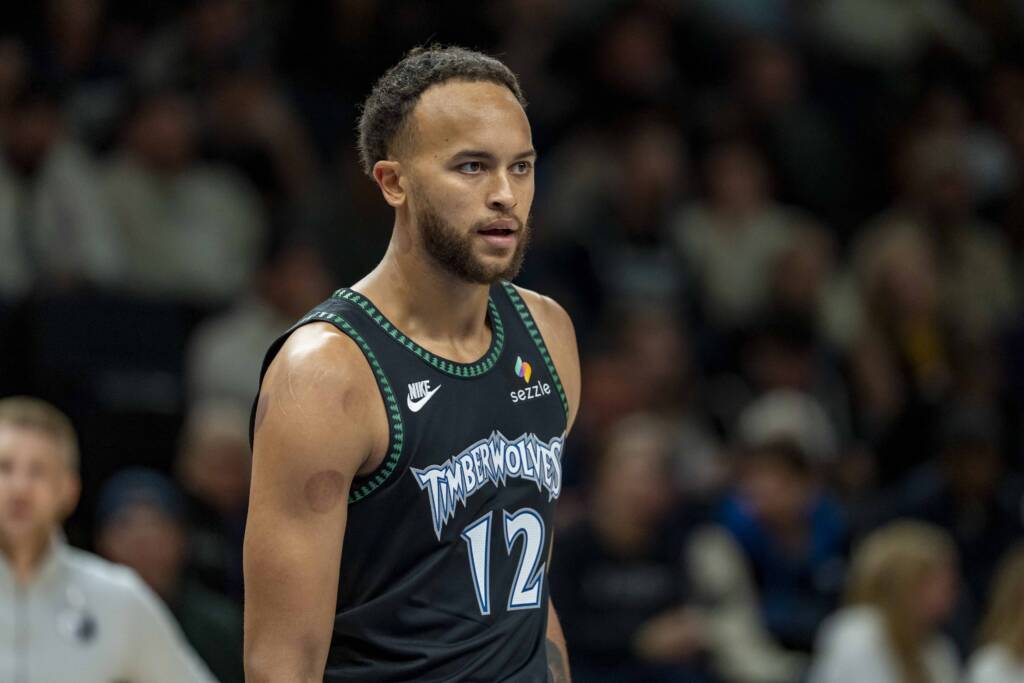
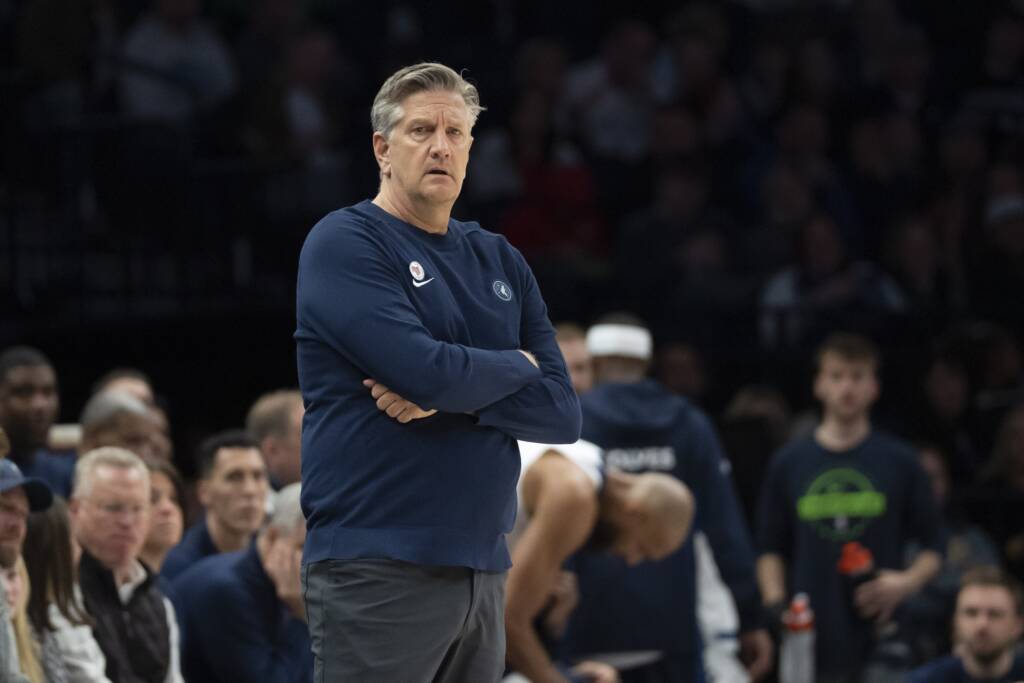
Naz Reid, Jaden McDaniels, Donte DiVincenzo, Julius Randle, Ayo Dosunmu, and Bones Hyland are role players that you hadn’t heard of until the first round of the tournament. You fall in love with all of them immediately, despite having no prior affiliation with the team at all. And Chris Finch is the well-known head coach who pops up every March for the tournament, and you stop and say, “Oh yeah, that guy, I forgot about him.”
The Timberwolves have been in the playoff picture all season long with a top-10 offense and defense. They’ve secured huge wins against the Oklahoma City Thunder, San Antonio Spurs, and Denver Nuggets. But they’ve also collapsed and lost to the Utah Jazz, Sacramento Kings, Brooklyn Nets, and a debilitating blown fourth-quarter loss to the Phoenix Suns early in the season.
Their Achilles’ heel all season has been playing down to their opponents’ level. Against some of the best teams in the league, the Wolves have shown the talent and toughness required to win a championship. But when the team is clearly tanking or missing a few starters, the Wolves tend to take the game off and crash out.
All of this feels like the Timberwolves would be a five seed in the NCAA tournament, destined to lose to a lovable 12 seed in the early hours of the first round. Think Wisconsin losing to High Point just a few hours ago. Memphis and Clemson lost to Colorado State and McNeese State, respectively, last year. And so on. 12 seeds have won 57 of 160 (36 percent) first-round matchups against five seeds since 1985, and this Timberwolves team would be ripe for a first-round upset.
Minnesota has the seventh-best record in the NBA and the eighth-best odds to win the 2026 NBA Championship, according to FanDuel. They’ll be riding high into the playoffs, assuming they can turn things on like last season and run through lesser competition to the Western Conference Finals for a third straight year.
If the NBA adopted a winner-take-all, 30-team tournament seeded by record, the Timberwolves would be the seventh seed and host the 24th-seeded New Orleans Pelicans. The Wolves are 43-27, and the Pelicans are 24-46, including losing two of three meetings against the Timberwolves this season.
But the Pelicans and Wolves are both 9-5 since the All-Star break, a span in which New Orleans’ offense and defense have been better than Minnesota’s. In a one-game, winner-take-all scenario, the Pelicans, led by Zion Williamson, who has quietly played in 53 games this season, Trey Murphy III, and Dejounte Murray returning from an Achilles tear, would be a tough out for the Timberwolves.
A five seed has never won the NCAA tournament, and the Timberwolves have never won an NBA Championship. A five seed has been runner-up four times, including San Diego State in 2023, Butler in 2010, Indiana in 2002, and Florida in 2000.
The Timberwolves are having another decent regular season. But the potential for massive disappointment is lurking around every corner. They spiritually feel like a five seed from a major conference that’s tied with a 12-seed 65-65 with 90 seconds left in the first round of the NCAA tournament. Anything can happen during March Madness, and Timberwolves fans should be glad they’ll never have to find out how bad it can get.