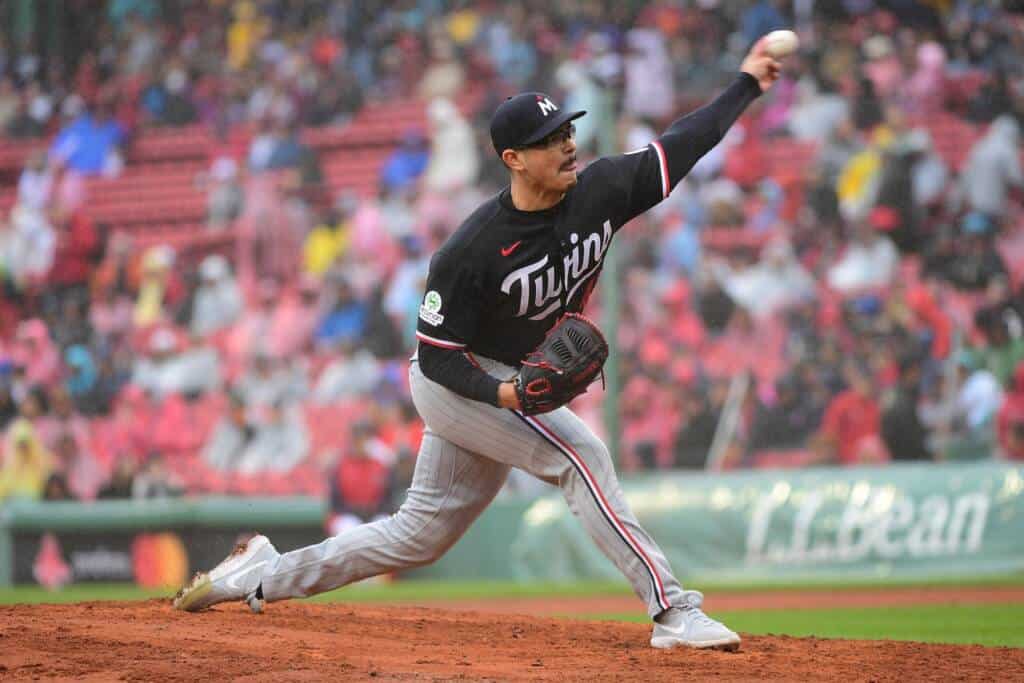
Ty Langenberg didn’t think he’d be at Triple-A this early in the season. But with constant turnover on the Minnesota Twins’ major league roster due to injuries or players being DFA’d, someone has had to step up and fill the open spots left on the St. Paul Saints roster.
Langenberg has been one of those someones. He had only reached Double-A at the start of the 2026 season and had some success and some moments to learn from, with a 4.71 ERA, 4.32 FIP, and a .284 opponents’ average. However, he also had a 23.2% strikeout rate and an 8.4% walk rate, indicating that, when executed correctly, his pitches shape well within the strike zone.
Ty Langenberg made his Triple-A debut at CHS Field on May 20, a day he was originally supposed to pitch for the Wind Surge.
“It was definitely a shock,” Langenberg said. “Obviously been following the process and everything in Double-A, but it was definitely a surprise regardless. Super excited beyond, it was just an incredible experience, and obviously, it was a pretty quick turnaround.”
Fortunately for the Urbandale, Iowa, native, he found out just in time to let friends and family know that their original five-and-a-half-hour drive to see him pitch would be cut by a couple of hours, because he was heading to St. Paul.
“It just worked out that it was a little shorter drive up north, and yeah, a lot of people were able to make it work,” he said. “I think I had roughly 15 or so. Some of them obviously left before the game was over and stuff, but it was a big group here supporting me, and that was definitely peace of mind for me going into it.”
In his Triple-A debut, Langenberg piggybacked off of starter Aaron Rozek for three innings of long relief. He pitched well, throwing 51 pitches, allowing just one run on four hits and a walk while striking out four. Langenberg will be the first to tell you that the key to his success isn’t his velocity. Therefore, his pitching identity, as he calls it, is being a blender with his stuff.
“In today’s game, velocity means a lot, and I kind of understand that’s not going to be a huge part of my game,” he said. “So I need to be a little bit more crafty and just kind of mix pitches continually, land stuff in the strike zone, try and get ahead of hitters because when you fall behind, it’s really tough to get hitters at this level out, especially.”
Ty Langenberg had already begun to notice a greater degree of difficulty moving up from Double-A to Triple-A. The first time he faced hitters with MLB experience was against the Omaha Storm Chasers, who had John Rave, Tyler Tolbert, and Abraham Toro, to name a few.
Langenberg struck out Rave and Toro in his Saints debut and got Toro to hit into a double play for the final out in his appearance.
“It felt like a feather in my cap, a little bit, gave me a little more confidence,” he said. “Especially after getting the first strikeout, I was kind of like, ‘Okay, kind of monkey off the back, kind of settle in. After that, it was very much a relief, and I kind of settled in with much more confidence.”
Langenberg’s teammates, who had already been in the lower levels of the minors with him before, such as Kaelen Culpepper, saw it as a solid start to see from Langenberg at the level before the majors.
“When I first got into this organization, we were together in Cedar Rapids, so now it’s just like we started in CR, and now we’re here,” Culpepper said. “So it’s always good to be with guys you kind of like, have been moving through the ranks with.”
However, Langenberg has allowed eight runs on 12 hits and one walk in 5 ⅔ innings over two outings since his Saints debut. Most of the issues stem from hitters making contact in the zone rather than chasing outside the zone. Therefore, it’s given Langenberg plenty to work on before his next outing back at CHS Field this upcoming week.
Ty Langenberg has six pitches in his arsenal, which include a cutter, slider, sinker, curveball, and change-up, so he has plenty of options to work with to keep hitters guessing. Now, he just needs to know which ones to use best against hitters in certain counts to get them chasing outside the zone. Once he does that, he should be able to pitch effectively, even in a hitter-friendly Triple-A environment.
“Having an identity of a blender had worked for me really well at the end of the year in 25 when I was in Cedar Rapids and [I] just kind of continued to do that,” he said.
“Obviously, just kind of refining the shapes with the slider, kind of getting that more consistent, and we added a curveball last year, so it was being able to separate those pitches and have separate profiles for everything to give a hitter a different look and just continue to blend those six pitches.”
“He’s a great guy, great arm,” said Culpepper. “He has a really bright future ahead of him, so I’m really excited for him. I’m really happy to play behind him.”