
Every summer, it seems one of the biggest topics of discussion is how many players the Green Bay Packers will carry at a certain position. Will the Packers carry seven wide receivers? Can they afford to carry a third quarterback on the 53-man roster?
However, as the 2026 season approaches, linebacker appears poised to receive more attention than usual.
Many NFL teams continue to prioritize defensive backs in response to pass-heavy offenses. However, the Packers appear prepared to carry an unusually deep linebacker room into training camp and potentially onto the final 53-man roster. The move reflects the makeup of Green Bay’s defense and the organization’s belief that linebacker depth could become a critical factor in competing for a championship.
Quay Walker‘s offseason departure created one of the most significant changes to Green Bay’s defense. Rather than replacing Walker with a single starter, the Packers have assembled a linebacker group that combines proven veterans, ascending young talent, and experienced special teams contributors. The addition of veteran Zaire Franklin gives Green Bay an established leader in the middle of the defense, while rising star Edgerrin Cooper continues to develop into one of the team’s most dynamic defensive playmakers.
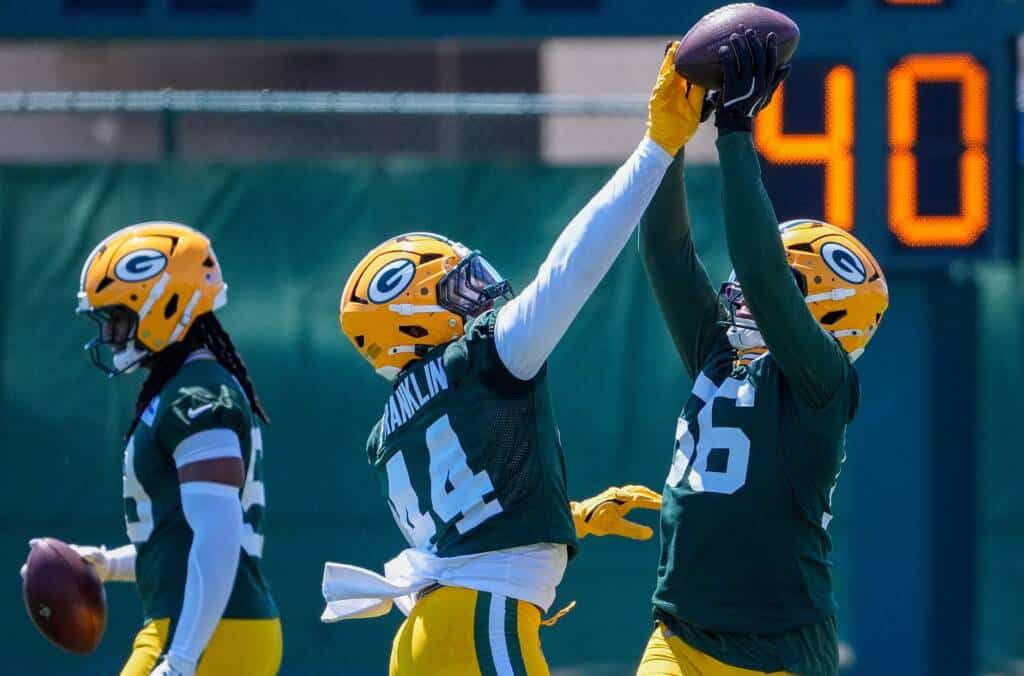
Franklin’s arrival brings stability and experience to the unit. A former All-Pro and one of the league’s most productive tacklers over recent seasons, Franklin provides the type of veteran presence that new defensive coordinator Jonathan Gannon values in the center of his defense. His leadership should help ease the transition following Walker’s departure while allowing younger linebackers to continue developing.
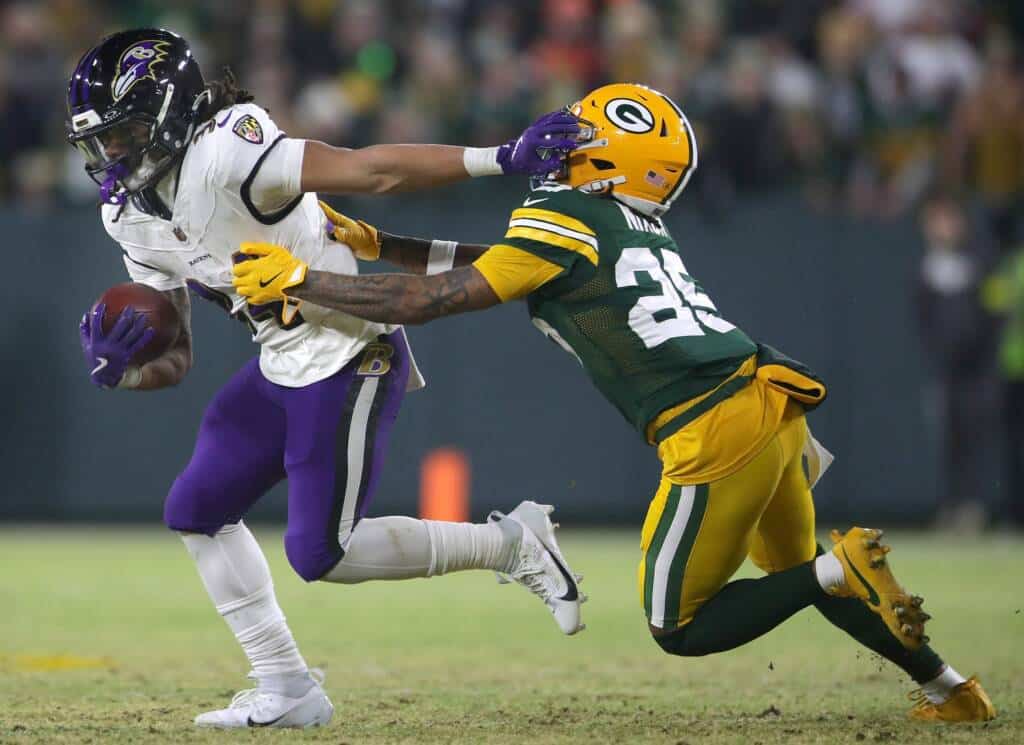
Beyond the projected starters, Green Bay’s depth chart is notably crowded. Isaiah McDuffie remains a reliable contributor with extensive starting experience. Meanwhile, Ty’Ron Hopper enters a critical stage of his development after showing flashes of potential during his first two NFL seasons. Veterans Nick Niemann and Kristian Welch continue to provide significant value on special teams, giving the Packers flexibility as they evaluate final roster spots.
What makes this situation particularly interesting is that the Packers are not merely rostering bodies for camp competition. Several of these players have legitimate cases to make the final roster. Green Bay’s front office has shown a willingness recently to retain extra linebackers when they provide value on special teams, and the current makeup of their roster suggests that trend could continue in 2026.
The philosophy makes sense when considering the demands of today’s NFL. While offenses continue to spread the field, defenses increasingly require linebackers who can play multiple roles. Modern linebackers must defend the run, cover athletic tight ends, blitz from various alignments, and contribute on special teams. Carrying additional linebackers gives coaches more flexibility to match personnel packages against different opponents throughout the season.
There is also a practical reason for Green Bay’s approach. Injuries are inevitable during an NFL season, and linebacker has been a position where depth has frequently been tested. By keeping a larger group available, the Packers can better withstand attrition while maintaining continuity in the defensive system.
The competition for roster spots should be one of the most intriguing storylines of training camp. Cooper and Franklin appear locked into major roles, but the battle behind them remains wide open. McDuffie’s experience gives him an advantage, while Hopper’s athletic upside could make him difficult to keep off the field. Niemann and Welch bring proven special teams value, an area that often determines the outcome of back-end roster battles.
Green Bay’s recent roster projections from analysts and observers have frequently included five linebackers on the initial 53-man roster, with some scenarios allowing for even greater depth depending on special teams needs and positional flexibility elsewhere on the team. That number would represent a heavier investment at linebacker than many teams employ.
If the Packers want to continue taking special teams seriously, they must provide new coordinator Cam Achord with a reasonable array of weapons. That would mean keeping all of Hooper, Niemann, and Welch. Last year they got a bit lucky when they cut Welch and he didn’t get picked up. When they needed him to backfill Niemann’s spot after his injury midseason, he was there. Might not happen again, and they could lose out on that needed depth.
Green Bay’s confidence in the position is also reflected in how the unit is viewed entering the summer. Despite losing Walker in free agency, several evaluations of the roster have described the linebacker position as one of the deepest on the team. The combination of Franklin’s experience, Cooper’s emerging star power, and the depth provided by McDuffie, Hopper, Niemann, and Welch has transformed what could have been a weakness into a potential strength.
For a franchise with playoff aspirations, depth often becomes as important as top-end talent. Green Bay’s front office appears to understand that reality. Rather than relying on a handful of starters, the Packers are building a linebacker room capable of handling injuries, contributing on special teams, and adapting to a wide variety of offensive challenges.
As training camp approaches, few position groups will face more intense competition than linebacker. Yet that competition may ultimately benefit the Packers. By going heavier than usual at the position in 2026, Green Bay is creating both insurance and opportunity – a combination that could pay significant dividends once the regular season begins.
If the Packers are serious about making a deep postseason run, the linebacker room may prove to be one of the fulcrums. In a league where depth often determines championships, Green Bay’s commitment to building one of its deepest linebacker groups in years could be a calculated move that pays off when it matters most.