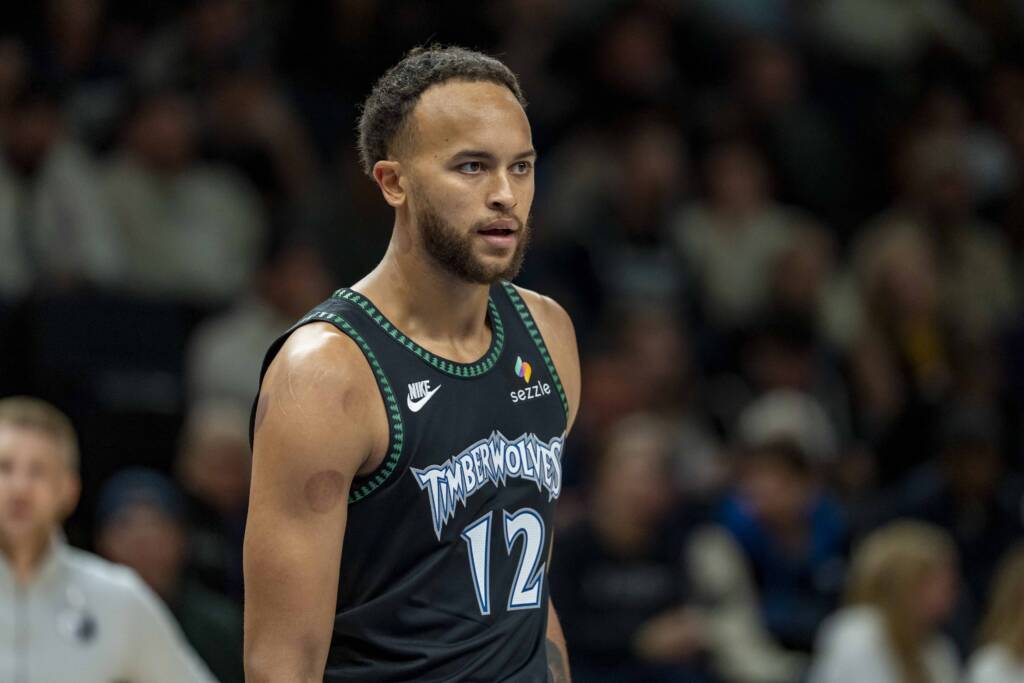

Chris Finch knew what he was getting when Kyle Anderson returned to the Minnesota Timberwolves after the Memphis Grizzlies bought out his contract on February 26.
Anderson, 32, has been all over the NBA since his previous stint with Minnesota. He bounced from the Golden State Warriors to the Miami Heat to the Utah Jazz and back to Memphis before now returning to the Timberwolves.
“Slow-Mo” may not be the player he was during his Timberwolves stint from 2022 to 2024, and buyout acquisitions tend to have a smaller impact than other transactions. However, it was evident that the Wolves desperately needed experienced depth on their bench.
This season’s bench and end-of-roster fluctuations have been far too tumultuous.
Entering the season, the Wolves anticipated that Rob Dillingham, T.J. Shannon, and Jaylen Clark could fill the void left by Nickeil Alexander-Walker. However, they have not developed as expected.
The Timberwolves later sent Dillingham to the Chicago Bulls as part of the Ayo Dosunmu trade. Meanwhile, players have passed Shannon and Clark on the depth chart, leaving them out of the rotation. Therefore, minutes have been available all season long.
While the Timberwolves knew they had a familiar face in Kyle Anderson, he has had a heavier workload than most anticipated. In Anderson’s 7 games since returning to Minnesota, he has played 17.4 minutes per game. His usage has highlighted Minnesota’s lingering issues with its initiator depth, big-man passing creativity, and overall big-man depth.
It is a lofty task, but the Timberwolves have asked Anderson to come in and fill many of these facets of the game that they have struggled with all season. It has been volatile, and Anderson is no longer the player he was during his first stint with the Wolves. Still, his presence has shown how desperately Minnesota’s roster construction needed his unique skill set to provide reliably productive minutes throughout the rest of the regular season.
Offensively, the Wolves have asked the most of Anderson with his elbow touches, hand-off hub work, and passing connectivity.
It’s no secret that Rudy Gobert struggles to make passing reads, dissect defenses, and make quick decisions offensively. It is not his forte. It doesn’t help that the Timberwolves are constantly battling to overcome Gobert’s offensive struggles, given how many minutes he will need to play.
Gobert’s struggles have only been exacerbated further in the playoffs, where defenses have completely sagged off him on short-roll opportunities, while attaching themselves to Anthony Edwards. If there isn’t an offensive toggle point for the Timberwolves, or if the defense is going to suffer with Gobert off the floor, they find themselves in a problematic situation.
Kyle Anderson isn’t going to change everything for the Timberwolves. He still has far too many fatal flaws. Still, he offers a different style to Minnesota’s offensive flow and has showcased what they need to build upon.
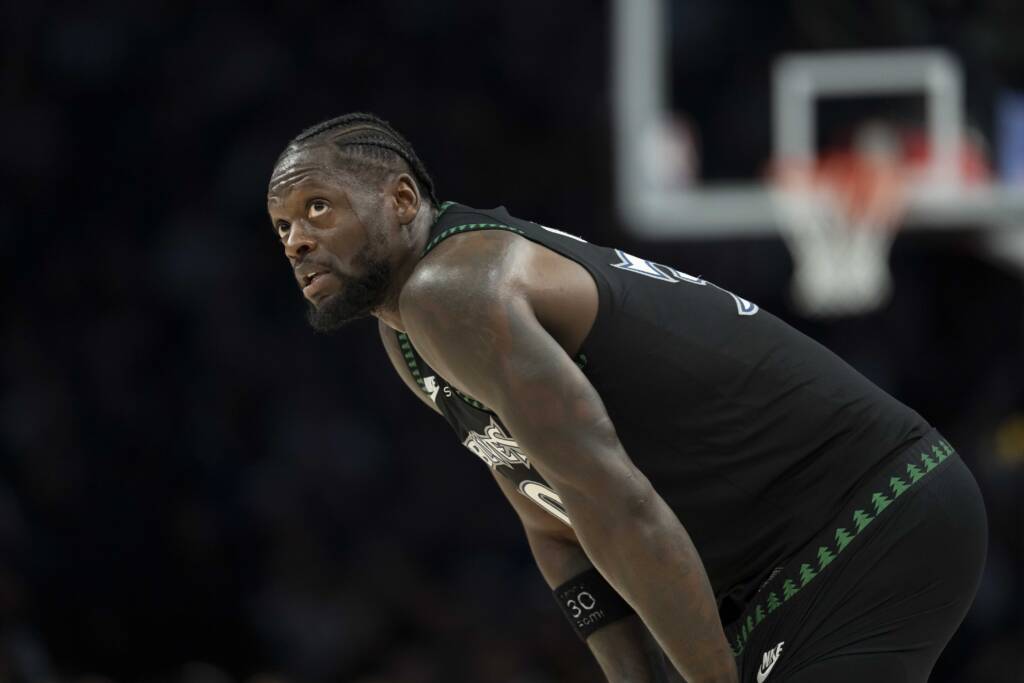
Julius Randle and Naz Reid have been able to flow into quick two-man games with others. Still, Randle thrives by getting middle of the court touches where he can either create for himself or kick out to find others. Meanwhile, Reid is better suited as a dynamic threat on a pass away. They just don’t have the quick-handoff hub skill set needed to maximize the offense, and their talents are much more valuable elsewhere.
What Anderson has been able to do with his quick decision-making and handoff creativity is something that the Timberwolves desperately needed, and also still need to fill moving forward.
On top of Anderson being relied upon as a handoff hub, he has been the initiator of much of their offense over the last couple of weeks. While it’s slow, and he relies on his backside to shield defenders for much of his time dribbling the ball up the court, it has worked out for Minnesota.
When Anderson initiates, they can still space the court by using Gobert or any other big man to set early offense screens away from the ball. Anderson also offers turnover mitigation because he’s calculated when he’s on the ball.
Anderson can fill in minutes for the Timberwolves because of his tailored, specialized skill set. Still, if anything, it has exposed how many small nuances Minnesota’s roster lacks.
It’s not ideal that the Timberwolves have had to rely on a buyout player, who they let leave in free agency two seasons ago. However, for the immediate time being, Anderson still has some value.
The Timberwolves are going to be back to square one in the playoffs next month. They can roll with Anderson and adjust to his shortcomings, which opponents will more readily expose in a playoff series. Or they can elect to play others. Either way, the Timberwolves are going to have to make a decision that exposes some flaws in their roster construction.
Time will tell with Anderson’s role on the Wolves through the rest of the season. However, his distinctive skill set, tailored to address some of Minnesota’s core roster weaknesses, may be too valuable to pass up. Regardless of the outcome, Kyle Anderson has demonstrated the holes the Timberwolves need to continue filling in the near future.