
And we thought that was all that was coming.
A bunt single from Tim Connelly? Dumping Julius Randle’s $33 million contract to the Brooklyn Nets for nothing in return? That was all he was going to do this summer?
Nonsense.
Since Connelly took over as the Minnesota Timberwolves’ President of Basketball Operations in 2022, he has always pursued risky moves. There hasn’t been another front office leader in the NBA who is more willing to repeatedly make the swing on a trade that could cost him his job if it fails.
But Connelly isn’t worried about being fired. He swings for the fences, never content with where the Timberwolves’ roster is until they win it all. And after the San Antonio Spurs sent Minnesota home in a six-game second-round series, a seismic change for the Wolves seemed possible.
Still, nobody could have expected the swing that Connelly took Thursday morning. It’s a swing as risky as any of his others, but one that has the upside to land 450 feet in the upper deck in left field.
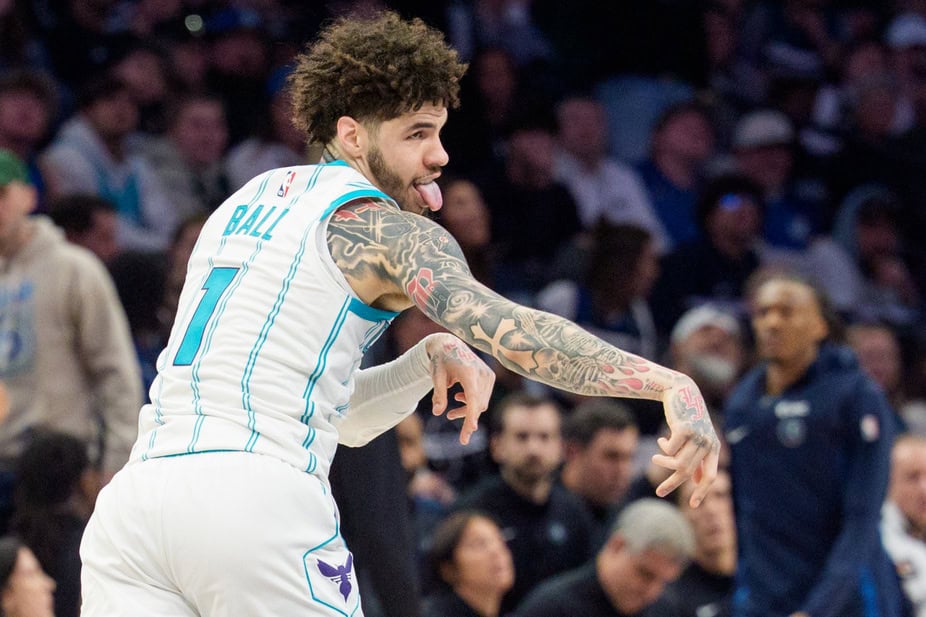
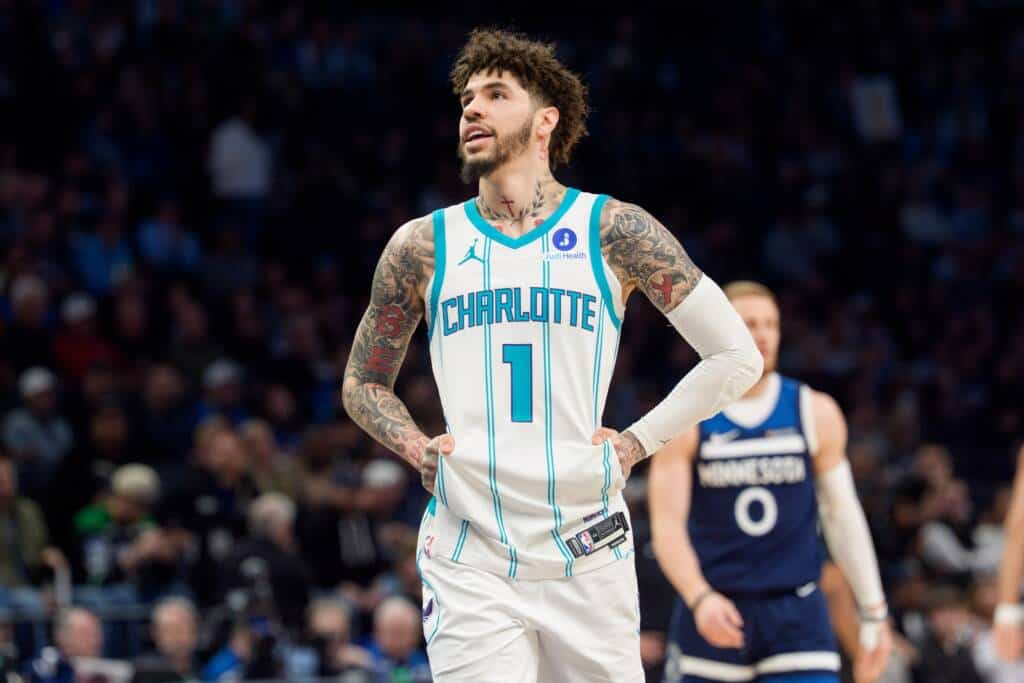
Shams Charania first reported that the Timberwolves are acquiring LaMelo Ball and Josh Green from the Charlotte Hornets in exchange for Naz Reid, a 2033 unprotected first-round pick, three first-round pick swaps, and three second-round picks. According to Dane Moore, the Wolves are expanding this trade into the Randle salary dump to make the finances work. Randle and Reid’s contracts together add up to Ball’s and Green’s.
Ball landing in Minnesota is a blockbuster move that came together at a breakneck pace.
Eleven hours earlier, the wheels had first started to move on Ball, 24, who became available for a trade. Charania reported minutes after the second round of the draft concluded Wednesday night that Charlotte was fielding trade offers for their All-Star guard, with multiple teams being serious pursuers.
Shortly thereafter, longtime NBA insider Marc Stein reported that the Timberwolves and Toronto Raptors were among the teams with interest in Ball, who is coming off a season in which he played at least 70 games for the second time in his six-year career.
That next morning, Connelly took the swing on a player with loud flaws but equally as ambient offensive capabilities. Where Ball excels offensively directly aligns with what Minnesota needs, this season and long-term, next to Anthony Edwards.
The Timberwolves have reportedly had interest in pairing Ball with Edwards for a while. At the trade deadline, reports surfaced that Minnesota took a last-second run at acquiring him. The Wolves don’t see Ball as this erratic, shot-chunking, turnover-prone, immature guard. They see him as someone who is a winner at the level required to win a championship. They believe that Ball is the missing piece to unlock this team’s offense.
At 6’7”, Ball gives Minnesota a tall lead guard who can score in bunches. Dating back to his time at Chino Hills High School — where he became a global star alongside his two older brothers, Lonzo and LiAngelo — Ball has always been able to score and put up highlights. He usually does so with an unorthodox jumpshot and a mix of off-balance, contested shot attempts.
Two years ago, Ball averaged a career high 25 points per game with the Hornets. He averaged 21.3 shot attempts while only connecting on 40.5% of them. Ball also took 11 threes per game, shooting 33.9%. He also dished out 7.4 assists with his unique array of flashy, behind-the-back, and no-look passes. However, that also led to him averaging 3.6 turnovers.
Ball played in 47 games that season due to an ankle injury, and the Hornets finished with the third-worst record in the NBA, their fifth straight season missing the playoffs since drafting Ball second overall in 2020.
Still, much of Charlotte’s losing wasn’t Ball’s fault. The team around him was not built with enough talent to win, regardless of how much Ball played. Still, it was fair to wonder if Ball’s playstyle could lead to winning in the NBA at the highest level.
I, for one, questioned it.
But this season, Ball proved that in the right situation, he can be the hub of an offensive engine that runs smoothly and, most importantly, wins games.
The Hornets ranked fifth in offensive rating this season. Over the final 38 games of the season, they finished with a 28-10 record that catapulted them into the Play-In Tournament, where they eventually lost in Game 2 of the tournament to the Orlando Magic.
During the final four months of the regular season, Charlotte had the NBA’s third-best offensive rating, and Ball started in every game. He averaged 20.7 points, 6.8 assists, 4.6 rebounds, and 2.5 turnovers on 46.8% from two-point range (6.5 attempts), 37.4% from deep (11.2 attempts). He was a +8.8 in 28.6 minutes per game.
Ball became less of a polarizing scorer and much more of a ball mover. He struck a balance that every good passing point guard needs. Minnesota expects Ball’s dynamic passing abilities to unlock easy offense for Edwards, reduce the chances of teams double-teaming him, and improve overall offensive flow.
Last season, Ball ranked ninth league-wide in points created off of assists at 17.5. Of the other players in the top ten in that metric, Ball’s bad pass turnover average (1.6) was the second lowest. He flourished around a Charlotte lineup that included knock-down three-point shooters in Kon Knueppel and Brandon Miller, an on-ball scorer in Miles Bridges, and a pick-and-roll lob-threat big man in Moussa Diabaté.
Minnesota’s potential starting lineup features even more shooting around Ball. Edwards has shot 39.6% from deep on 9.5 attempts over the last two seasons. Ayo Dosunmu shot 43.9% from deep last season, and Jaden McDaniels shot 41.2%.
That floor spacing, paired with a passer like Ball operating off of screens from Rudy Gobert, should reliably unlock an avenue of Minnesota’s offense that Julius Randle — Minnesota’s best passer last season — occasionally found, but not consistently enough to maintain a good fit.
So why would the Hornets, a young and upcoming team, want to part with Ball at his age after they finally got a taste of the postseason?
In moving Ball, the Hornets were able to lock up Coby White, whom they acquired at the trade deadline, to a three-year deal. They can now focus on building a new nucleus around White, Kneuppel, Miller, and Reid. And they will have the ability to do so with ample draft capital from Minnesota.
But if Ball didn’t have evident flaws, Charlotte probably wouldn’t have traded him. The Hornets would have viewed him as Minnesota sees Edwards. But Ball has legitimate injury concerns, having played in only 63% of Charlotte’s regular-season games since 2020. He is not a defensive player, which the Wolves will have to make up for with Edwards, Dosunmu, McDaniels, and Gobert picking up the slack. Minnesota acquiring another forward will also help. Ball also has off-court maturity concerns — videos of him recklessly driving his high-end cars around Charlotte have gone viral.
Therein lies the risk that Connelly is taking. Once again, he parted ways with a slew of picks to bring in a polarizing, expensive player. But at the same time, the Wolves like Ball the teammate. They also believe they have seen enough high-quality, winning basketball from Ball to be confident he can be their long-term point guard alongside Edwards. Connelly took a swing at that happening.
If he strikes out, maybe he will be out of a job someday. Time will tell if Connelly deposits this move into the bleachers in left field.