Before Anthony Edwards made his triumphant return in the Minnesota Timberwolves’ Game 1 win over the San Antonio Spurs, people billed the Wolves vs. Spurs series as Rudy Gobert vs. Victor Wembanyama.
They portrayed it as a heavyweight battle between the two Frenchmen, a combined 14’5” with over 16 feet of wingspan. Gobert, the mentor. Wemby, the next face of the league.
Gobert had gommaged Nikola Jokic in the first round. His suffocating defense turned off the water on the league’s best player and left the Denver Nuggets high and dry. It was a tally in the ledger for those who believe the Wolves made the right call on the controversial Gobert trade.
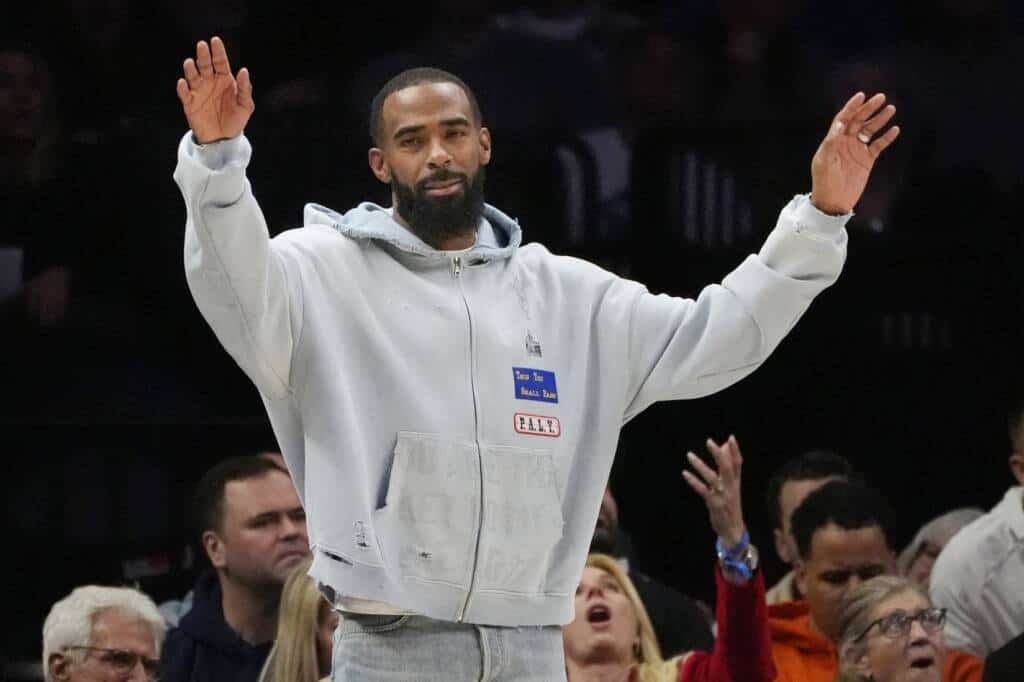
Edwards’ unexpected return after hyperextending his knee stole the headlines. He had 18 points in 25 minutes off the bench. Still, the Wolves won with an egalitarian effort. Julius Randle led them with 21 points in a team-high 41 minutes. Jaden McDaniels and Terrence Shannon Jr. had 16, and Mike Conley and Naz Reid chipped in 12.
Still, Minnesota’s defensive strategy on Wembanyama was the most interesting development. Chris Finch naturally used Gobert on Wembanyama. However, he cycled Julius Randle and Naz Reid on him when Gobert was off the court or spaced the floor with shooters to get Wembanyama out of the paint.
Minnesota didn’t play Gobert for most of the fourth quarter. He didn’t enter the final frame until the 1:44 mark with the Wolves leading 100-94. Chris Finch substituted Gobert for Reid, presumably looking to put his best defensive lineup on the court to seal the victory.
Finch substituted Gobert in between Julius Randle’s free throws. Randle hit his second to go up 101-94. According to ESPN’s metrics, the Wolves had a 90.1% chance to win the game at that point. However, San Antonio closed the game on an 8-3 run, reducing Minnesota’s chances of winning to 76.3%.
Julian Champagnie had an open look at a game-winning three-pointer that would have won the game for San Antonio in regulation.
Gobert alone wasn’t at fault for San Antonio’s comeback. Nobody was boxing out Champagnie. Anthony Edwards had a poor inbounds pass. Finch also subbed Reid back in with 34 seconds left, so Gobert didn’t play until the final whistle.
Still, the bigger-picture takeaway is that the Wolves can guard Wembanyama without Gobert. They can toggle Randle and Reid on him, using one player’s size to defend him while the other scores. Reid provides valuable floor spacing, while Randle can play bully ball against San Antonio’s defense.
Conversely, Wembanyama can face up against Gobert and dribble around him. The Spurs have also effectively marooned Gobert offensively, forcing Minnesota’s players away from him while he searches for a dribble-handoff.
Rudy Gobert will have a role in this series. However, it may mean he plays fewer minutes while Randle and Reid guard Wembanyama. He can absorb fouls while containing Wembanyama, allowing Randle and Reid to defend him physically without concern about fouling out.
The Wolves will have to match San Antonio’s offensive firepower, and that means keeping scorers like Randle and Reid on the floor. Tim Connelly built a versatile roster, and the coaching staff must take advantage of that. Against the Spurs, that may mean leaning less into Gobert and more into a scoring lineup that defends Wembanyama physically.
Rudy Gobert was masterful against Nikola Jokic in the first round. The Spurs also won’t play him off the court as other teams have in the playoffs. However, he may have to accept a lesser role. That would contradict the French connection people highlighted at the start of the series. But the best teams adjust to what they see on the court, not to the narratives or anything else outside of it.