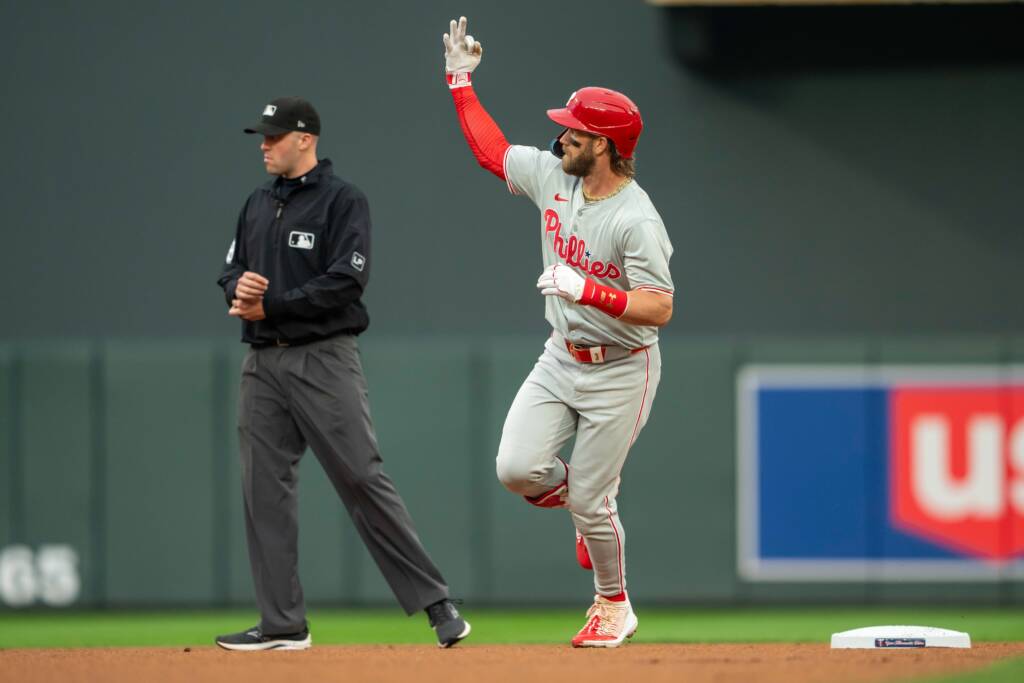

Rob Manfred sat in his office when the door flew off the hinges. Emerging from the cloud of smoke, Bryce Harper immediately started going to town with a baseball bat. After Manfred said something like “Now, let’s be reasonable,” the Philadelphia Phillies star finally turned his attention to Manfred.
Seeing his life flash before his eyes, Manfred knew he had a problem on his hands. But instead of continuing his rampage in this New York City office, Harper calmly placed a folder on his desk and slid it over. It wasn’t the proposal of a new collective bargaining agreement. Nor was it a highly lucrative contract with millions of dollars of deferred money.
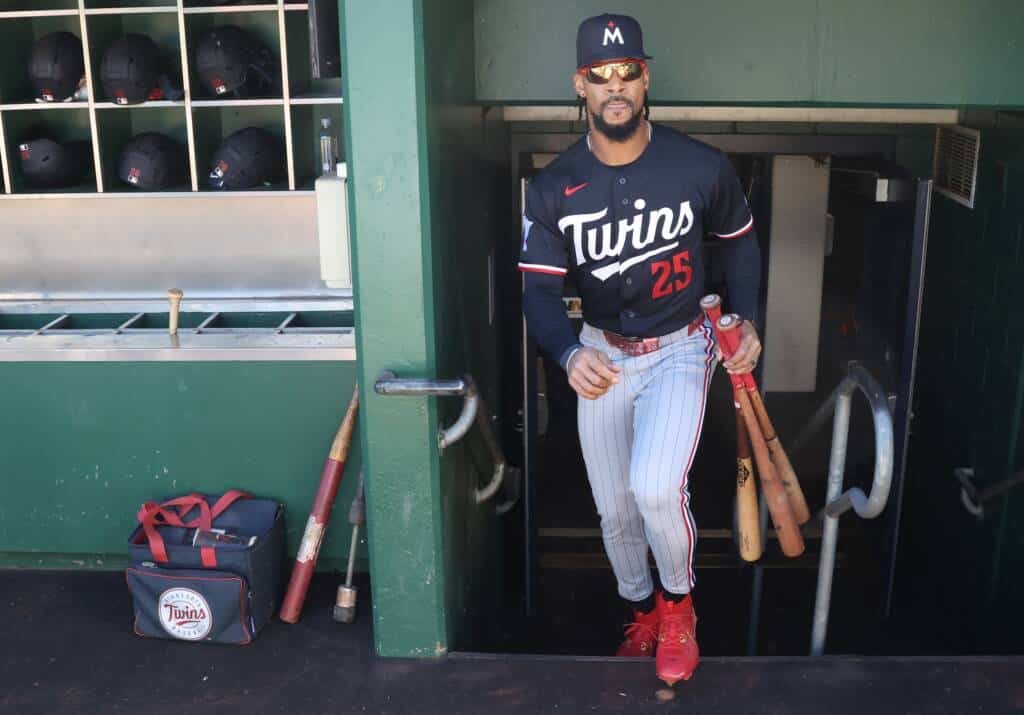
It was a profile of his new favorite team, the Minnesota Twins.
The Twins aren’t Harper’s favorite team because he could wind up playing for them someday. Instead, they are his favorite team because he just made his point for them as Major League Baseball and the MLB Players Association go to war over the possibility of a salary cap.
The battle for a salary cap has spanned decades. The ugliest example occurred in the mid-90s, when the owners’ push for a cap led to the cancellation of the second half of the 1994 regular season and the World Series that fall. When baseball returned the following year, it underwent a lengthy rehabilitation process and ultimately put the game in its current state.
Both sides have had their labor squabbles since then, but it never seemed like a lockout was imminent until now. Big market teams like the Los Angeles Dodgers and New York Mets have dropped $700 million-plus contracts in the past two winters, and smaller market teams like the Twins and Pittsburgh Pirates feel like they can’t compete.
“There are tons and tons of really passionate Pirates fans who remember when the Pirates were a great, great team year in and year out,” said Manfred. “And they just want to look at the system and say, ‘We got a fair chance to win’ when you’re sitting around in February looking at Spring Training and what the year’s gonna be like. And we need to deal with that issue.”
That sounds great because a team like the Pirates probably can’t offer a big contract with millions of dollars shoveled into the future. But for players, it will also affect their future earnings.
The implementation of a salary cap would stop big teams from spending recklessly, which is a problem for players. While the cap sounds like a great idea, players look over at the NFL and see how teams assign values to certain positions, which diverts money to other areas and creates lesser markets for those who play positions deemed less valuable.
Think of how an NFL team treats the running back position. Because they break down earlier, teams typically allocate more funds to the quarterback or the left tackle, placing a premium on those areas compared to running backs. In MLB, that could be akin to a general manager refusing to pay starting pitchers, which creates a problem that players don’t want.
There’s also the possibility that contracts would no longer be fully guaranteed to help them comply with the cap. With the possibility of being cut or traded at any moment, it’s a problem that players don’t want to deal with, which could eliminate their big paydays.
“You really can’t have [fully guaranteed contracts] in the cap systems the way our players have them,” MLBPA Deputy Executive Director Bruce Meyer said during an episode of Foul Territory last month. “In football, this is the most obvious. Every free-agent period is like a bloodbath. They’re cutting players, players at all levels – Pro Bowl players, middle-class players – to try and squeeze in a salary for a quarterback. Even the quarterbacks, they go to continuously and say, ‘Well, would you take less so we could sign this guy?’”
That’s probably why ESPN’s Jeff Passan reported that Harper stood “nose-to-nose” with Manfred and told him to get out of their clubhouse during the All-Star Game. But it’s also why Harper may use the Twins as an example of why baseball needs a salary floor.
One week ago, the Twins were in striking distance of a playoff spot. They had one of the best bullpens in the league, a superstar shortstop, and a pair of All-Stars. In an alternate universe, Minnesota may have sold a piece or two at the deadline to remain competitive. Instead, they traded eight players at the deadline and a total of 10 players in the week leading up to it.
You could make a baseball argument for these moves. Even if it was ownership’s fault that they moved Carlos Correa, he felt like a square peg in a round hole. The Twins were one of the worst teams in baseball since blowing a double-digit lead in the wild card standings last August. It felt like things just weren’t working, so the front office decided to give the roster a hard reset.
But Twins fans know what’s happening here. The Pohlad family has been focused on shedding payroll seemingly since the 2023 season ended, and the team is up for sale. Most large businesses find ways to cut costs before a sale to make them more appealing to a potential buyer, and eliminating half the roster definitely saved ownership some money.
Business over baseball has been ownership’s mantra for years, but this was a team that was roughly five games out of a playoff spot at the deadline. If anything, the Twins should have finished out the year and then made whatever changes they needed to make. The optics look bad, not just to angry Twins fans, but players who have earned the right to what the market dictates as fair value.
In Harper’s eyes, frugal teams like the Twins are making the choice not to compete, which is enough to make any player angry. It’s a stark contrast to the San Diego Padres, who have run in the red for several years but still bring roughly 40,000 fans to the ballpark every night because they do things like trade half of their top prospect list and hold a $217 million payroll to keep up with the Dodgers in the NL West.
Manfred downplayed the All-Star confrontation with Harper earlier this week. But it’s an issue that’s not going away. If Minnesota’s prospective buyer emerges in the next few weeks, it will be another bullet point for Harper and the MLBPA, who are gearing up for one of the sport’s nastiest labor disputes in recent memory.