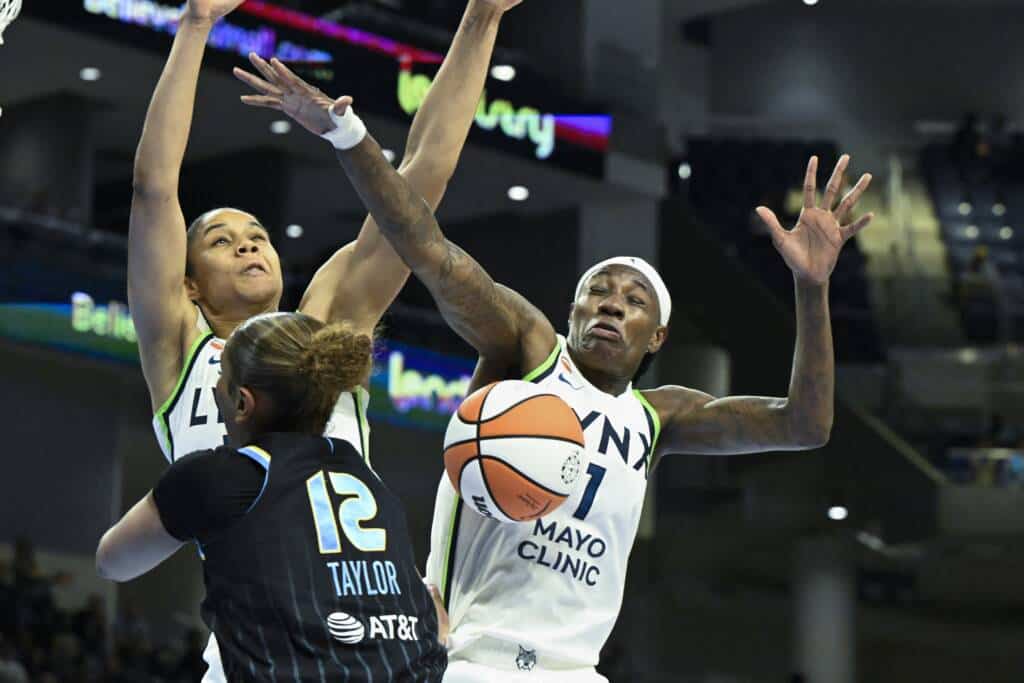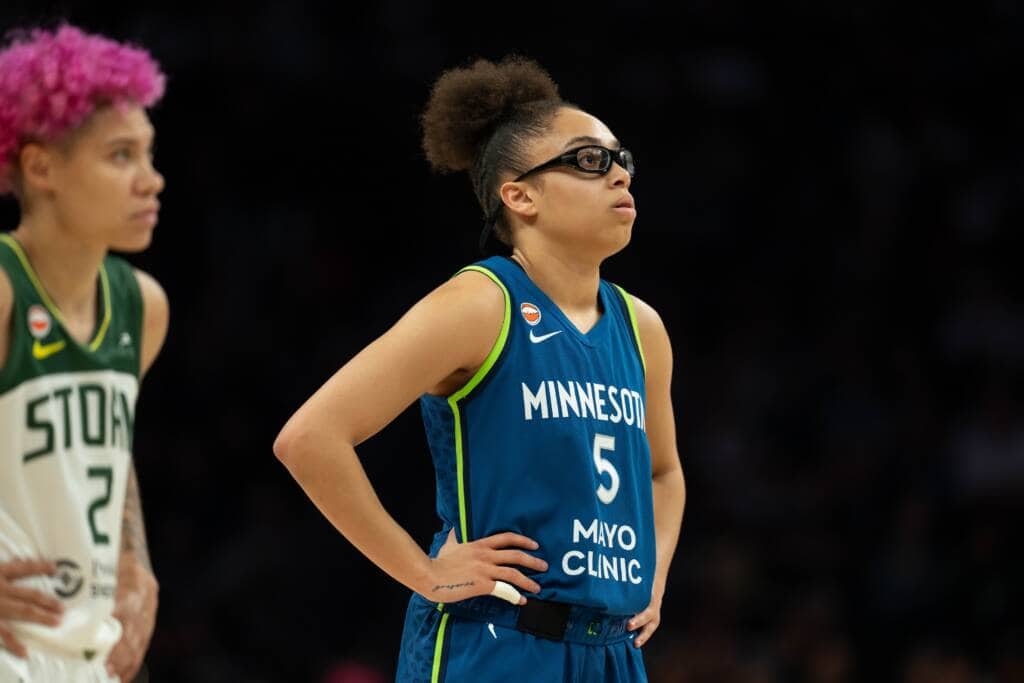

Following an 84-79 loss to the Washington Mystics, Cheryl Reeve poked a hole in the Minnesota Lynx’s top-ranked offense while explaining why the Lynx lost.
“We’re not going to be a team that passes the least in the league, and that’s where we’re at right now,” she said. “So maybe it takes a game like this to address it and kind of get their attention. … It’s not intentional, we don’t have a problem that way, but sometimes the easy stuff escapes us.”
The quote sums up the only offensive issue in the dominance this season, and it feels somewhat counterintuitive to what the Lynx do. They drafted a generational point guard, Olivia Miles, who frequently makes highlight reels with her playmaking and passing.
However, Minnesota’s ball movement and passing are legitimate concerns that Reeve should highlight. The Lynx are last in the WNBA in assist percentage at 61.6%, a full 1.8% the 14th-ranked Connecticut Sun. Assist percentage doesn’t tell the whole story; it only measures the number of baskets that come off an assist. Still, when looking back to past years, the Lynx aren’t playing up to their standards.
In 2025, they had the second-best assist percentage in the league at 72.6%. The year before that, they led the league at 76.4%. In the past 15 seasons, the Lynx have only been out of the top six in assist percentage once. They also led the league three times during that time.
The drop in assists for a Cheryl Reeve team is somewhat unprecedented, and additional advanced statistics paint an even more puzzling picture. Only 54.9% of their two-point makes come off of assists, compared to 64.4% a season ago. Notably, most assists in the two-point range come off a pick-and-roll or an action that allows someone on the perimeter to find a player going to the basket for an easy shot. Fast-break opportunities also factor into this, allowing for easy assists.
Naturally, you’d think the Lynx’s assist percentage inside would be considerably higher, because they run among the most pick-and-roll sets in the league. That would suggest the Lynx would have more assists, not fewer. However, looking at the guards dishing out the passes, the reasons for the low assist rate become clear. Olivia Miles and Courtney Williams are the players tasked with setting up the offense.
In Miles, the Lynx have a playmaker who can see and make almost every pass. However, she’s third in the league with 40 bad-pass turnovers and has the fifth-most loose-ball turnovers at 15. That would suggest that part of the reason for the Lynx’s low assist percentage is the 2.35 turnovers per game Miles has off bad passes. Even if one of those turnovers each game resulted in a made basket instead, their assist percentage would rise to 64.3%, a 2.7% increase overall.
Now factor in that Williams also ranks tenth in the WNBA for bad-pass turnovers, with 26 total. That means that 3.88 of the Lynx’s 13.9 turnovers per game are by bad passes by guards. Theoretically, if they turned half of those turnovers into assists, the Lynx would be up to 67.0%, which would rank 7th in the league.
Turnovers on bad passes would, in theory, lead to more assists. However, the other factor contributing to the lower percentage is Miles’ isolation play off pick-and-rolls, in which she can turn the corner and finish at the rim at an elite level. Likewise, Williams is one of the best mid-range shooters in the WNBA and typically gets those shots off of isolations, with 49.3% of her points coming in the mid-range. That percentage is 18.8% higher than the second place.
Tie the turnovers into the isolation play from the guards and add in the fact that they’ve had slightly fewer assists this season, and it starts to explain why the Lynx have not been an elite passing team.
However, as Reeve said, perhaps the loss to the Mystics could be enough to draw the attention the team’s ball-movement concerns need. While a drastic change is unlikely to happen quickly, knowing the issue is an important step in the team’s growth.