
The Minnesota Vikings embraced a unique mentality and structure when they hired Kwesi Adofo-Mensah in January 2022. Adofo-Mensah had worked in the NFL since 2013. However, he had an analytics background, previously worked on Wall Street, and wasn’t previously a scout or player.
Adofo-Mensah was more of a CEO, while former general manager Rick Spielman was a chief scout. He focused on collaborating with coaches and scouts, rather than critiquing their evaluations. Adofo-Mensah would maximize value in the draft and with free-agent signings, while allowing the coaches and scouts to evaluate Minnesota’s talent on the field.
“Kwesi is naturally committed and driven to building the best teams through consensus building and the pursuit of information,” Vikings co-owner and team president Mark Wilf said at the time. “We believe he will immediately make us better as a team and organization.”
The Vikings didn’t get the results they wanted. They won 13 games in Adofo-Mensah’s first season, and 14 two years ago, but never achieved even a single playoff victory.
Minnesota’s collaborative structure also didn’t produce results. Minnesota only received 172 starts from players drafted between 2022 and 2025, the second-fewest in the league. Their 2025 free-agent class flopped, and Sam Darnold won the Super Bowl after they chose not to franchise tag him.
The Wilfs never specified why they let Adofo-Mensah go. Still, the five GM candidates with whom they requested a second interview have more typical executive backgrounds. Four have ties to the team. One of them is interim GM Rob Brzezinski, who has worked for the Vikings since 1999.
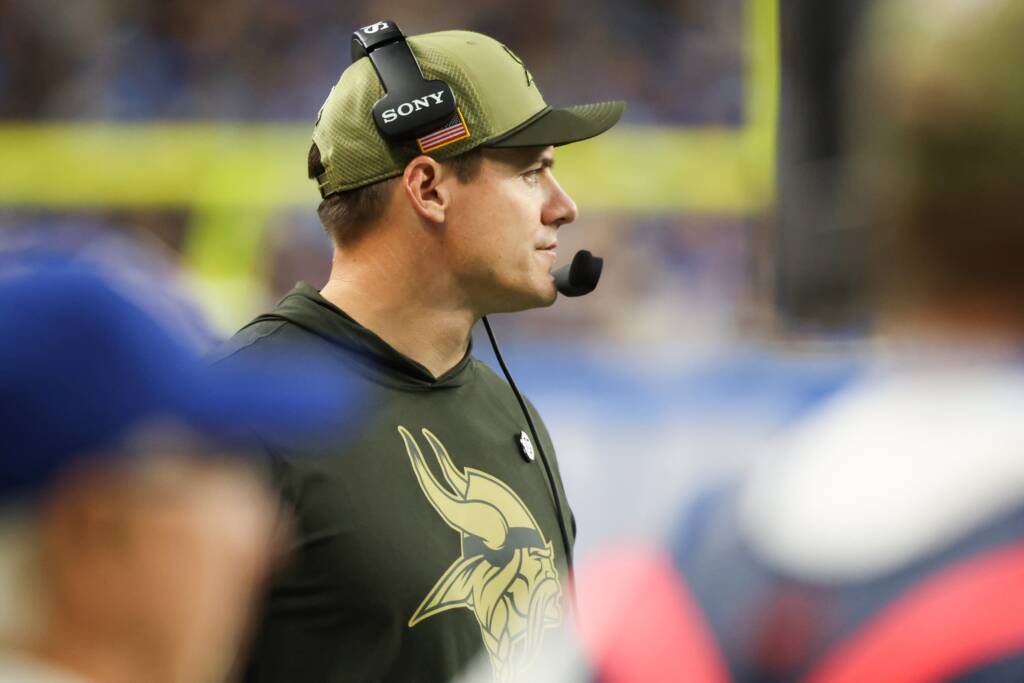
After an atypical hire and structure under Adofo-Mensah, the Vikings appear to want to return to something more common, as they had under Spielman. After firing Adofo-Mensah in January, Mark Wilf said he would “lean toward” a traditional arrangement that would give the next general manager decision-making power with “extremely heavy input” from Kevin O’Connell.
However, that’s not a typical arrangement. O’Connell has been part of the interview process and likely will influence who the Wilfs hire. It’s looking increasingly likely they’ll go with Brzezinski. He’s been with the organization since 1999, collaborated with O’Connell and Brian Flores during the draft and free agency, and knows how to maximize the cap.
Hiring Brzezinski would mean the Vikings would embrace a unique front-office structure, though. They’d be returning to the “triangle of authority” they had when Spielman and Brzezinski shared decision-making responsibility with Brad Childress and Leslie Frazier from 2006 to 2011.
Like Adofo-Mensah, Brzezinski doesn’t have a scouting background. He has a law degree and has negotiated contracts with structures that allow the Vikings to fit as much talent as possible under the cap. He’d be collaborating with O’Connell and Flores on personnel decisions while manipulating the cap to add talent, as he did in the past.
Meanwhile, the Vikings could hire someone with a background in scouting or management. However, O’Connell will have been part of the interview process, and Flores has say over defensive personnel as part of the extension he signed in the offseason.
The Vikings aren’t the first team to retain a head coach after firing their general manager. Still, this is a unique arrangement. O’Connell has significant influence within the organization, and Minnesota is paying Flores like a head coach and offering him autonomy over the defense.
Anyone could understand why the Vikings would want Brzezinski as their GM. He’d advocate for the organization as a long-time employee, while allowing O’Connell and Flores to build out the roster on their side of the ball.
The Vikings could also hire an outside general manager, retain Brzezinski as the cap guru, and retain O’Connell as head coach and Flores as defensive coordinator. That keeps a lot of valuable talent in the building. However, the new GM wouldn’t have the power people in his position usually do, if only because he didn’t hire the head coach, the defensive coordinator, or the cap guy.
That’s why a president-GM structure may serve the Vikings best. They could empower Brzezinski as the organizational advocate. He could hire a GM who ultimately makes personnel decisions, and they’d collaborate with O’Connell and Flores to find the right players for their systems.
It’s complicated, but their arrangement was always going to make things more complicated. Brzezinski has been with the Vikings since 1999, and O’Connell and Flores have significant influence within the organization. Still, Minnesota needs a GM with a vision who can make the final call on large decisions. A president-GM structure would allow them to do that.